


14mm vs. 16mm Pickleball Paddles: Which One Should You Choose?
Comparing a 14mm pickleball paddle with a 16mm pickleball paddle is a common step when shopping for new equipment. This 14mm vs. 16mm pickleball paddle guide explains how pickleball paddle thickness can affect feel, maneuverability, stability, and ball response—and shows you how to choose a pickleball paddle that fits your game.
The short answer is simple: a 14mm paddle often feels quicker and more responsive, while a 16mm paddle commonly feels more stable and forgiving. However, thickness is only one part of the complete paddle design.
What Do 14mm and 16mm Mean?
The numbers refer to the thickness of the paddle’s core, measured in millimeters.
A 14mm paddle has a thinner core, while a 16mm paddle contains more core material between the two paddle faces. That two-millimeter difference may appear small, but it can influence how the paddle feels when swinging, blocking, driving, dinking, and returning fast shots.
The SCHEELS guide to pickleball paddle core thickness describes 14mm paddles as a balance of maneuverability and power, while 16mm paddles typically emphasize control, stability, and a larger sweet spot.
These are general tendencies rather than fixed performance rules. Two paddles with the same thickness may still feel completely different because of their materials, weight, balance, and construction.
What Does a 14mm Pickleball Paddle Feel Like?
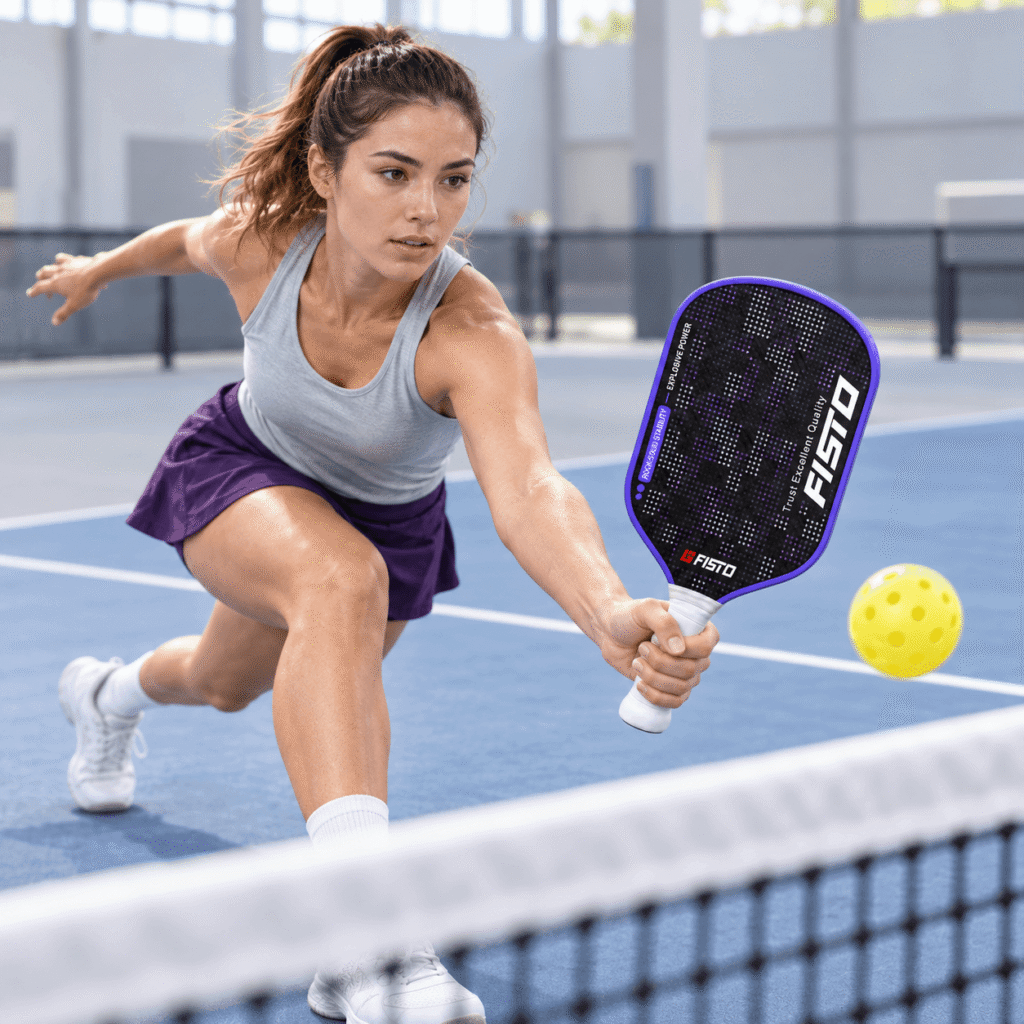
A 14mm paddle generally has a firmer and more direct response at contact.
Players may choose a thinner paddle for:
- Faster paddle preparation
- Quick reactions at the Kitchen
- A crisp hitting sensation
- Responsive volleys and counterattacks
- Easier maneuverability during fast exchanges
- A more direct connection with the ball
Because a 14mm core contains less material, the paddle may transfer more feedback to the player’s hand. Some players enjoy that immediate response, while others prefer a softer feeling.
A 14mm paddle may suit:
- Offensive players
- Players who value hand speed
- Intermediate players developing faster attacks
- Doubles players who frequently exchange volleys
- Players who prefer a firm, responsive paddle
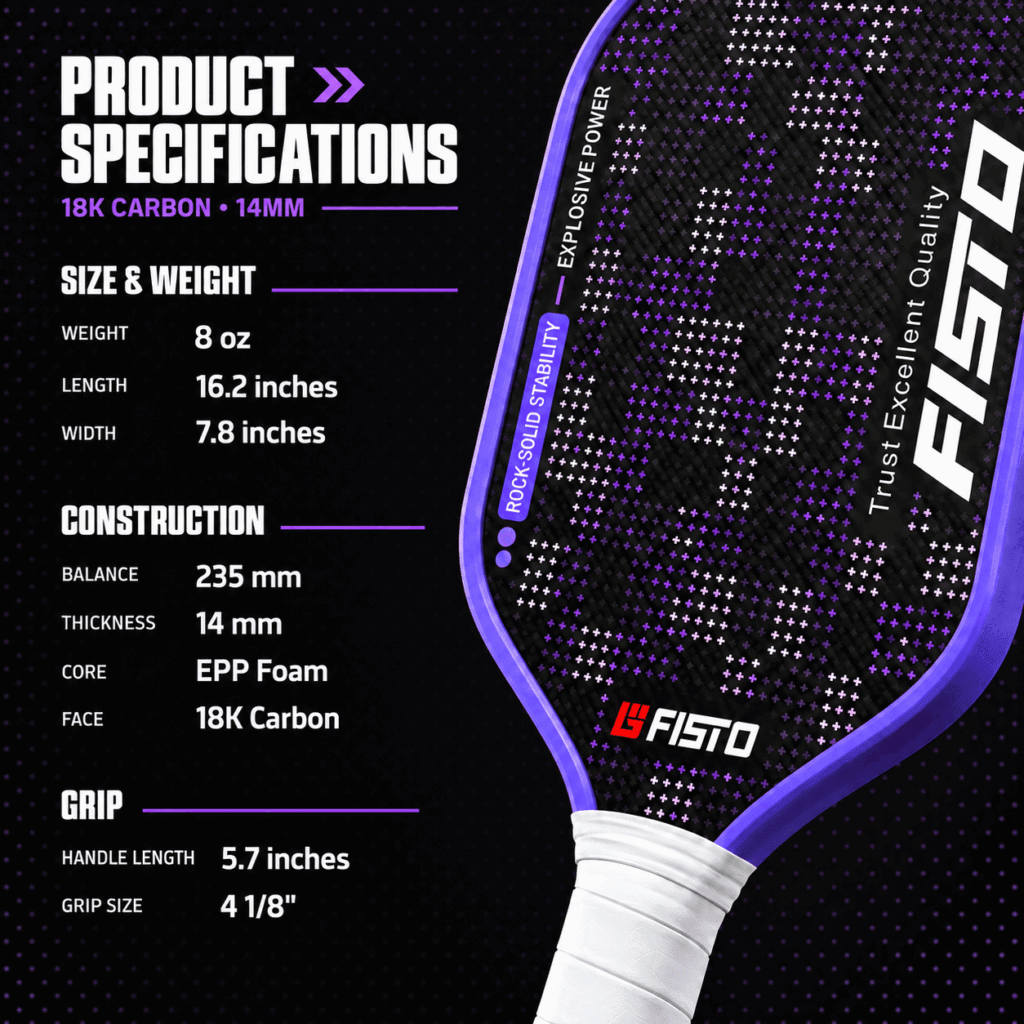
For example, the 18K Carbon 14mm EPP Foam Pickleball Paddle combines an 18K carbon-fiber face with a 14mm EPP foam core. This construction is designed for players seeking quick handling, responsive feedback, and an energetic feel for fast, offense-oriented play.
What Does a 16mm Pickleball Paddle Feel Like?

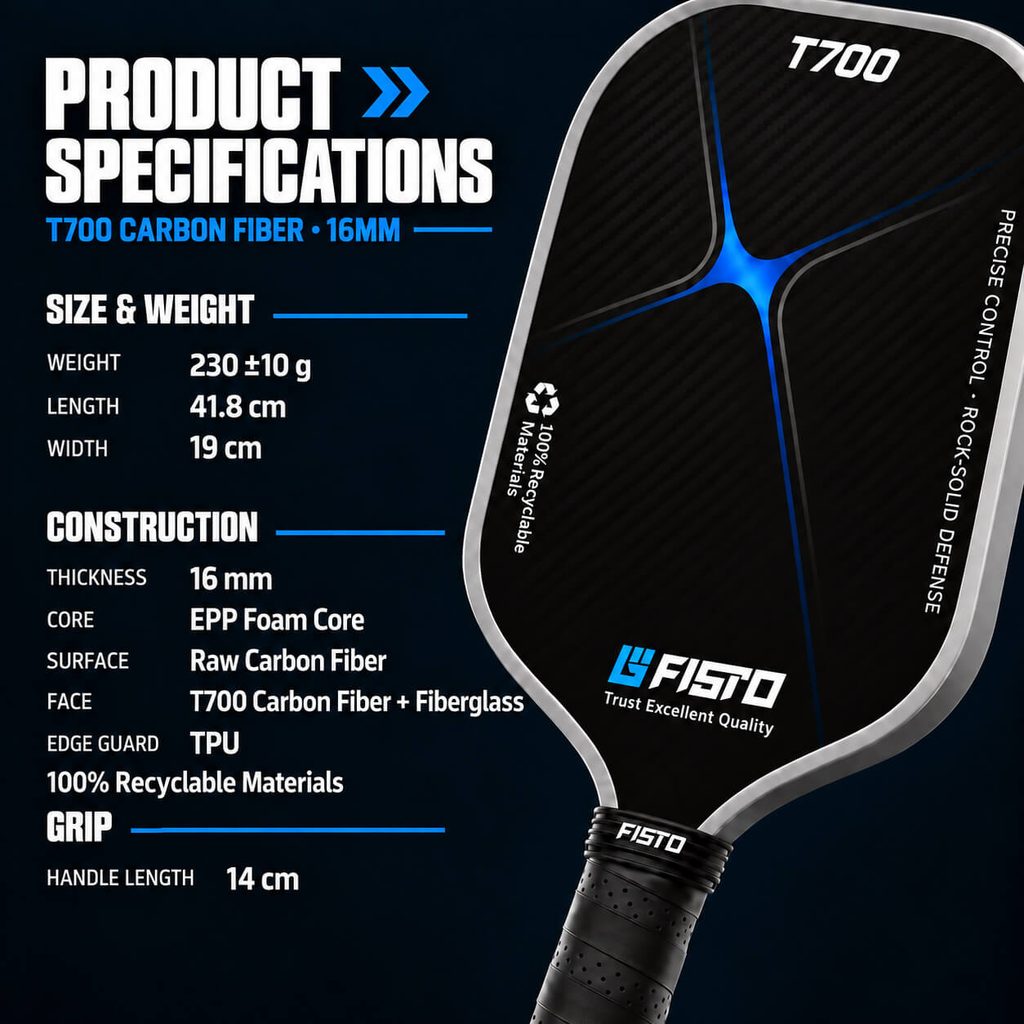
A 16mm paddle has a thicker core and often provides a more cushioned, stable response.
Players may choose a thicker paddle for:
- Greater stability on contact
- A more forgiving sweet spot
- Controlled dinks and resets
- A softer or more comfortable feel
- Reduced vibration
- Consistent performance on off-center shots
The added core thickness can help absorb more of the ball’s impact. This may make it easier to slow down fast shots, control defensive blocks, and place softer shots near the Kitchen.
A 16mm paddle may suit:
- Beginners and recreational players
- Control-oriented players
- Defensive players
- Players who prioritize stability
- Players who prefer a softer response
- Players who want greater forgiveness
A thicker paddle does not automatically guarantee better control, but many players find 16mm models more predictable during longer rallies and defensive exchanges.
14mm vs. 16mm Pickleball Paddles at a Glance
| Feature | 14mm paddle | 16mm paddle |
| Typical feel | Firmer and more direct | Softer and more cushioned |
| Maneuverability | Often quicker | May feel slightly more substantial |
| Ball response | Fast and responsive | Stable and controlled |
| Sweet spot | May be less forgiving | Often larger and more forgiving |
| Vibration | More noticeable feedback | Greater vibration dampening |
| Common priority | Speed and responsiveness | Stability and consistency |
| Often suits | Offensive and fast-hand players | Beginners, recreational and control players |
These differences are general guidelines. The complete construction matters more than thickness alone.
Does a Thinner Paddle Always Provide More Power?
Not necessarily.
It is easy to assume that a thinner paddle always produces more power and a thicker paddle always provides more control. Modern paddle construction is more complicated.
Performance also depends on:
- Total paddle weight
- Swing weight
- Balance point
- Face material
- Core material and density
- Paddle shape
- Handle length
- Sweet-spot design
- Edge or foam reinforcement
- Thermoformed or cold-pressed construction
- Player technique and swing speed
The Racket Central comparison of 14mm and 16mm pickleball paddles explains that the two thicknesses typically differ in response, forgiveness, and control, while the right choice ultimately depends on playing style and the paddle’s overall construction.
A well-constructed 16mm paddle may generate more power than a basic 14mm model. Likewise, a carefully balanced 14mm paddle may provide more control than another paddle with a thicker core.
Do Paddle Shape and Weight Still Matter?
Yes. Paddle shape and weight distribution can significantly change how a 14mm or 16mm paddle feels.
An elongated paddle may offer additional reach and leverage but can feel slower during quick exchanges if more weight is positioned toward the top. A widebody paddle may feel more stable and forgiving because of its broader hitting area.
Our guide to widebody, elongated, hybrid, and standard pickleball paddle shapes explains how shape affects reach, maneuverability, balance, sweet-spot location, and perceived power.
When comparing paddle thicknesses, try to evaluate models with similar shapes and weights. Otherwise, the difference you notice may come from balance or geometry rather than core thickness.
Which Paddle Thickness Is Better for Beginners?
Many beginners feel comfortable with a 16mm paddle because its thicker core may provide:
- A more forgiving hitting area
- Stable contact
- A softer feel
- Better control during slower shots
- More confidence on off-center contact
However, a lightweight and well-balanced 14mm paddle can also work for a beginner who values quick handling and a responsive feel.
Beginners should prioritize comfort, manageable weight, grip size, and repeatable contact instead of choosing solely by thickness.
Which Paddle Thickness Is Better for Advanced Players?
Advanced players may use either thickness.
A player who relies on quick counterattacks and fast hand exchanges may prefer a 14mm paddle. A player who emphasizes resets, drops, blocks, and controlled placement may prefer a 16mm model.
Technique and personal preference become increasingly important as playing ability improves. Advanced players often select thickness based on specific tactical needs rather than assuming one option is universally better.
Which One Should You Try?
Consider a 14mm paddle if you prefer:
- Quick handling
- A firm response
- Fast volleys and counters
- Direct ball feedback
- An offense-oriented playing style
Consider a 16mm paddle if you prefer:
- Greater stability
- A softer contact feel
- A more forgiving sweet spot
- Controlled dinks and resets
- Consistent performance during longer rallies
Whenever possible, test both thicknesses using the same shots:
- Serve
- Return of serve
- Forehand drive
- Backhand
- Dink
- Third-shot drop
- Defensive block
- Fast volley exchange
Pay attention to contact consistency, swing comfort, paddle preparation, vibration, and control. The best choice is the paddle you can use confidently throughout an entire game.
Final Takeaway
The difference between a 14mm and 16mm pickleball paddle is mainly about feel, responsiveness, stability, and forgiveness.
A 14mm paddle commonly provides quicker handling and a firmer response. A 16mm paddle often delivers greater stability, cushioning, and a more forgiving feel.
Neither thickness is automatically better. Paddle weight, balance, shape, face material, core construction, grip, and player technique all influence performance.
Choose according to how the complete paddle feels during real play—not simply because one number appears more powerful or more advanced.
FAQ
No. Both can be suitable for different playing styles.
Not necessarily. Power depends on the complete paddle design and the player’s swing.
Yes. Intermediate players can use either 14mm or 16mm depending on their preferences.


