


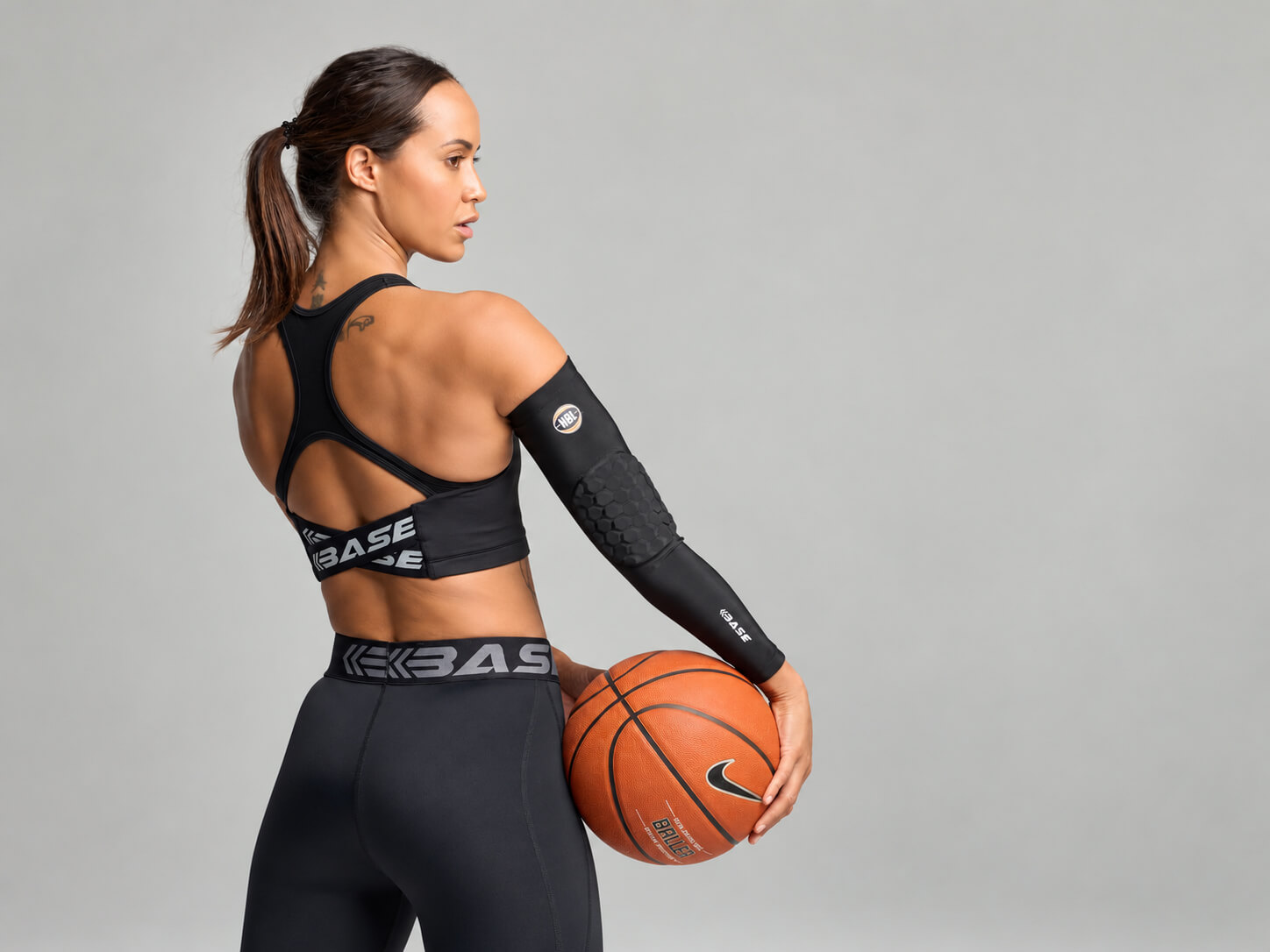
2026 Sports Protective Gear Trends: From Basic Support to Smart Protection
The leading sports protective gear trends for 2026 reflect a shift from basic compression toward smarter, lighter, and more adaptive products. Smart sports protective gear and wearable sports technology are expanding what knee, ankle, wrist, elbow, and back supports may be able to do.
At the same time, sports injury prevention, comfort, fit, and durability remain the industry’s core priorities. For brands and suppliers, OEM sports protective gear is also becoming more customized in its materials, compression levels, support structures, sizing, appearance, and potential sensor integration.
The future of sports protection is not simply about adding electronics. It is about combining effective physical support with better fit, useful data, responsible product claims, and designs suited to specific sports and users.
2026 Sports Protective Gear Trends at a Glance
| Trend | Product direction |
| Injury-risk awareness | Appropriate support, fit, protection, and education |
| Lightweight construction | Thinner, more flexible, and breathable materials |
| Dynamic support | Zoned compression and structures that move with the body |
| Wearable sensors | Motion, pressure, workload, and physiological monitoring |
| Connected products | Support plus sensors, mobile apps, and data analysis |
| Recovery integration | Products designed for training and post-activity use |
| Personalization | Activity-specific support, sizing, compression, and structure |
| OEM/ODM development | Deeper customization beyond colors and logos |
1. Sports Injury Prevention Remains the Foundation
The sports-protection market continues to be driven by genuine concerns about injuries during training, competition, and recreational activity.
The CDC reports that approximately seven out of ten emergency department visits for sports- and recreation-related traumatic brain injuries and concussions involve children ages 17 and younger. It also reports that more than two-thirds of concussions in high school sports result from collisions between athletes. The CDC’s sports and recreation injury data highlights why appropriate equipment, safe playing practices, education, and injury-response procedures remain essential.
Protective equipment cannot eliminate every injury. Risk also depends on technique, playing conditions, training volume, physical preparation, sport rules, and athlete behavior.
However, properly selected equipment can remain an important part of a broader safety system.
Core product categories will therefore continue to include:
- Compression knee sleeves
- Patella straps
- Sports ankle supports
- Adjustable wrist supports
- Elbow braces and compression sleeves
- Calf compression sleeves
- Back and waist supports
- Protective pads
- Sport-specific head protection
The basic support function is not disappearing. Instead, manufacturers are improving the materials, structure, fit, ventilation, and intended use of these products.
2. Fixed Support Is Giving Way to Lightweight Dynamic Support
Traditional braces often emphasized rigid stabilization. That approach remains appropriate in certain situations, but many active consumers want support without excessive bulk or restricted movement.
A major 2026 design direction is therefore:
Lighter weight + lower profile + closer fit + activity-appropriate support
Modern knee, ankle, wrist, and elbow products increasingly use:
- High-stretch fabrics
- Breathable knitted zones
- Seamless or low-seam construction
- Three-dimensional knitting
- Targeted compression
- Adjustable straps
- Flexible support stays
- Silicone anti-slip elements
- Moisture-management materials
- Anatomical shaping
Instead of immobilizing the joint, these products are intended to follow normal movement while providing compression, proprioceptive feedback, or additional stability.
For example, the FISTO compression knee brace for meniscus support uses lightweight, breathable elastic fabric to provide a close yet flexible fit for training, running, and everyday activity. Its compression-based construction supports the knee without unnecessarily restricting movement, illustrating how a well-designed non-electronic brace can balance comfort, mobility, and practical everyday support.
Comfort is becoming a competitive feature rather than a secondary consideration. A product that provides strong support but traps heat, slips during movement, or restricts normal motion may be unsuitable for running, racket sports, basketball, cycling, or extended gym sessions.
3. Wearable Sensors Are Entering Sports Protection
Traditional protective equipment answers the question:
How can the product support or protect the body?
Smart protective equipment introduces another question:
What is happening to the body during movement?
Wearable sports technology may include:
- Inertial measurement units
- Accelerometers and gyroscopes
- Force and pressure sensors
- Surface electromyography
- Heart-rate monitoring
- Temperature sensors
- Sweat biosensors
- GPS trackers
- Flexible electronic textiles
A sports-medicine scoping review identified applications for wearable devices in monitoring joint movement, limb position, pressure, workload, range of motion, heart rate, running mechanics, head impacts, rehabilitation, and return-to-play information. The review also notes their potential role in training optimization and injury-risk assessment. The complete PubMed review of wearable sensor devices in sports medicine provides a useful overview of these technologies and their current applications.
This creates several possible future product concepts:
- A knee support that tracks joint angles
- An ankle support that measures movement and loading patterns
- A wrist support that records repetitive motion
- A compression sleeve that monitors muscle activity
- Protective headgear that records impact events
- Smart textiles that collect temperature or sweat-related data
However, collecting data is not the same as preventing an injury or providing a medical diagnosis. Sensor accuracy, placement, interpretation, and validation all matter.
4. “Support + Sensor + App” Is Emerging as a Product System
Smart protection does not require every function to be built directly into the brace.
A more practical product architecture may be:
Brace or sleeve → Sensor module → Mobile app → Data analysis → User feedback
“Inform” is more accurate than automatically claiming “prevent.” A device may identify workload changes, movement asymmetry, or unusual patterns, but the meaning of those signals depends on the quality of the sensor, the software, and the evidence supporting its recommendations.
Developers must also address:
- Battery life
- Charging convenience
- Wireless connectivity
- Sensor positioning
- Motion artifacts
- Calibration
- Washability
- Detachable electronic modules
- App compatibility
- Data storage
- Cybersecurity
- User privacy
A smart brace that is difficult to charge, clean, connect, or understand may offer less practical value than a well-designed traditional support.
5. Protective Support and Recovery Products Are Converging
The boundary between protection and recovery is becoming less distinct.
Traditional protective equipment has generally focused on:
Before activity → During activity
Modern product lines increasingly address:
Before activity → During activity → After activity → Recovery
Compression sleeves, calf supports, ankle sleeves, and knee supports may be positioned for warm-up, training, competition, cooldown, or post-activity comfort.
Future product platforms may combine:
- Compression
- Joint support
- Stability
- Thermal management
- Recovery-oriented comfort
- Movement monitoring
- Training-load information
Brands should remain careful when making medical or recovery claims. A compression product may provide support or a comfortable feeling of containment, but statements about treating injuries, improving circulation, accelerating recovery, or preventing medical conditions should be supported by appropriate evidence and reviewed for regulatory compliance.
6. Smart Textiles Will Make Sensors Less Obtrusive
One limitation of early wearable technology is that rigid devices can feel bulky or interfere with movement.
Smart textiles may help integrate sensing functions more naturally into:
- Knitted knee sleeves
- Compression shirts
- Ankle supports
- Wrist wraps
- Calf sleeves
- Protective padding
- Athletic base layers
Conductive yarns, flexible sensors, and embedded pressure zones may allow products to collect information without relying on large external devices.
For the user, successful integration should feel simple. The product should still be comfortable, flexible, washable, and easy to wear.
For manufacturers, the challenge is more complex. Smart-textile development may require coordination among:
- Textile suppliers
- Electronics developers
- Sensor manufacturers
- App developers
- Data specialists
- Testing laboratories
- Regulatory consultants
- Sports-medicine professionals
The performance of the finished product will depend on how well those different systems work together.
7. Personalized Support Is Becoming More Important
Athletes do not all need the same level or type of protection.
Requirements differ according to:
- Sport
- Position
- Movement pattern
- Training intensity
- Age
- Body dimensions
- Previous injury history
- Desired support level
- Indoor or outdoor use
- Session duration
- Climate
- Personal comfort
A runner may prioritize light compression and breathability. A basketball player may need support designed for jumping and lateral movement. A racket-sport player may prefer flexible wrist, elbow, ankle, or knee support that does not interfere with rapid direction changes.
Even within the same product category, multiple versions may be appropriate:
- Light compression
- Moderate sports support
- Adjustable support
- Lateral reinforcement
- Patella stabilization
- Recovery-oriented compression
- Sensor-compatible construction
Personalization does not always mean making a unique product for every individual. It can also mean creating a well-structured product range for different activities, support requirements, and body types.
8. OEM and ODM Customization Is Moving Beyond Logos
n the past, sports-support customization often focused on:
- Color
- Logo
- Label
- Packaging
In 2026, commercial buyers are increasingly interested in deeper product differentiation.
OEM and ODM options may include:
- Fabric composition
- Fabric thickness
- Knit structure
- Compression level
- Support zones
- Reinforcement materials
- Strap placement
- Anti-slip design
- Product dimensions
- Size grading
- Left- or right-side construction
- Ventilation areas
- Surface texture
- Sensor pockets
- Detachable electronic modules
- Packaging materials
- Testing requirements
For manufacturers, the competitive advantage is no longer simply the ability to produce a brace. It is the ability to translate a buyer’s target user, sport, price position, and functional requirements into a consistent product specification.
A productive OEM development process should begin with clear questions:
- Which sport or activity is the product designed for?
- What level of support is required?
- Which movements must remain unrestricted?
- How long will the product normally be worn?
- Which climates and markets will it serve?
- How will fit and sizing be validated?
- Which claims will appear on the packaging?
- Does the product require physical, chemical, durability, or electronic testing?
- Will sensors be removable before washing?
- Who owns, stores, and manages any collected data?
9. Smart Products Will Not Replace Traditional Supports
Smart technology will influence premium and specialized products, but conventional supports will remain important.
Most recreational users still prioritize:
- Comfort
- Reliable support
- Breathability
- Easy wear
- Secure fit
- Durability
- Simple care
- Reasonable pricing
A well-designed compression sleeve does not need an app to provide practical value. Likewise, adding a sensor does not automatically improve a poorly fitting brace.
Consumers should begin with the correct product type and size. FISTO’s guide to choosing a knee brace by fit, support level, and comfort explains why activity, breathability, sizing, and secure placement remain essential considerations.
The market is therefore likely to develop along two parallel paths.
| Traditional sports support | Smart sports support |
| Compression | Compression plus data collection |
| Mechanical support | Mechanical support plus sensors |
| Stability | Stability plus movement monitoring |
| Comfort | Comfort plus personalized feedback |
| Easy care | Detachable electronics and specialized care |
| Accessible pricing | Premium or professional positioning |
| No connected account | App, connectivity, and data management |
These categories are complementary rather than mutually exclusive.
10. Key Development Priorities for Brands and Manufacturers
Successful sports protective gear in 2026 should not be defined by the number of features it includes. Product development should focus on whether each feature solves a real user problem.
Important priorities include:
Fit Validation
The product should remain secure without excessive pressure, slipping, bunching, or restricting normal movement.
Material Performance
Fabrics should be selected according to elasticity, recovery, breathability, moisture management, durability, and skin comfort.
Sport-Specific Structure
Support zones, straps, stays, padding, and compression should match the intended movement pattern.
Durability and Care
Brands should consider repeated stretching, abrasion, perspiration, washing, drying, and long-term deformation.
Evidence-Based Claims
Marketing language should distinguish between support, comfort, monitoring, risk assessment, treatment, and prevention.
Responsible Data Use
Connected products need clear policies covering user consent, data ownership, security, retention, and sharing.
Modular Design
Detachable sensors may make products easier to wash, repair, upgrade, and reuse.
Scalable Manufacturing
A successful prototype must also support stable material sourcing, repeatable assembly, consistent sizing, quality inspection, and commercial production.
Final Takeaway: From Protective Product to Data Platform
The sports protective gear industry is moving through four broad stages:
Basic support → Dynamic support → Data monitoring → Personalized protection
Elastic fabrics, compression zones, straps, support stays, and protective padding will remain the foundation. Lightweight structures and better materials will improve comfort and movement. Sensors and smart textiles will gradually add data capabilities to selected products.
Smart protection will not become standard in every brace immediately. Cost, accuracy, washability, battery life, privacy, validation, and regulation remain important barriers.
For sports-equipment brands and OEM/ODM suppliers, the opportunity is broader than adding electronics. Future product development will require stronger capabilities in:
- Functional materials
- Anatomical structure
- Activity-specific support
- Fit and size development
- Product testing
- Sensor integration
- App and data coordination
- Responsible marketing claims
- Flexible manufacturing
The most successful products will not be the ones with the most technology. They will be the ones that combine appropriate support, comfortable movement, reliable construction, useful information, and a clear understanding of the athlete’s actual needs.
FAQ
In 2026, sports braces and supports are evolving from traditional basic support toward lightweight designs, dynamic support, smart monitoring, and personalized protection. Traditional sports braces continue to focus on comfort, stability, and protection, while smart sports supports incorporate sensors and motion-tracking technology to monitor movement and collect performance data.
Smart sensors can be integrated into knee braces, ankle supports, wrist braces, and other sports supports to collect data on movement, pressure, muscle activity, and other physiological signals during physical activity.
Research in 2026 has explored technologies such as inertial measurement units (IMUs), pressure sensors, surface electromyography (sEMG), and smart textile sensors.
No. Traditional sports braces and supports still offer key advantages, including lightweight construction, comfort, ease of use, and affordability.
In the future, traditional and smart sports supports are more likely to coexist in the market. Conventional supports will remain the preferred choice for everyday sports and recreational activities, while professional sports equipment and premium products will increasingly incorporate smart monitoring features.


