


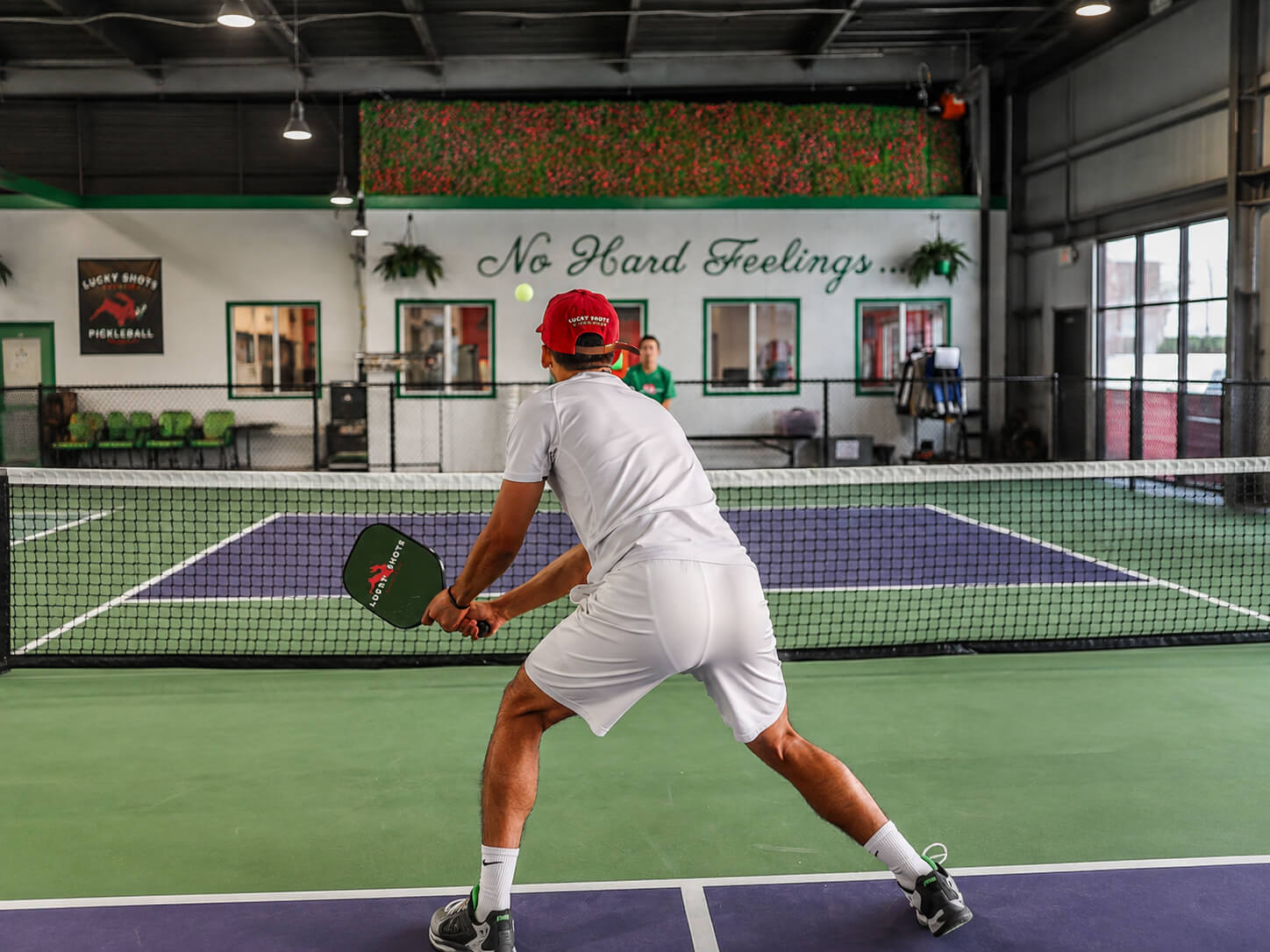
How to Improve Your Pickleball Serve: 7 Tips for Better Control, Depth, and Power
These pickleball serve tips will help you improve your pickleball serve through repeatable pickleball serve technique, focused pickleball serving drills, and a better understanding of how to choose the best pickleball paddle for serving.
The serve starts every point in pickleball. While it may not be as aggressive as a speed-up at the Kitchen line, a reliable serve can help you begin the rally on your terms.
A well-placed serve can:
- Push the receiver farther behind the baseline
- Make the return more difficult
- Give you more time to prepare for the third shot
- Target an opponent’s weaker side
- Prevent the receiver from attacking with an easy return
- Create uncertainty through changes in depth and placement
You do not need the fastest serve on the court. A deep, accurate, and repeatable serve is usually more valuable than a powerful serve that frequently lands out.
Here are seven practical ways to make your serve more consistent and effective.
1. Build a Legal and Repeatable Serving Motion
Before adding power or spin, make sure your basic motion is legal and easy to repeat.
Under current USA Pickleball rules, players can use either a volley serve or a drop serve.
Volley Serve
A volley serve is struck before the ball bounces. The serving motion must meet several requirements:
- The server’s arm must move in an upward arc at contact.
- Paddle contact must be no higher than the waist.
- The highest point of the paddle head must not be above the highest part of the wrist at contact.
Drop Serve
For a drop serve, the ball is released and allowed to bounce before it is struck. The player cannot throw the ball downward, propel it upward, or add spin during the release. Once the ball bounces, the volley-serve swing restrictions do not apply.
With either serve:
- Both feet must remain behind the baseline when the ball is struck.
- The serve must travel diagonally into the correct service court.
- The ball must clear the Kitchen and Kitchen line.
- At least one foot must remain inside the imaginary extensions of the sideline and centerline.
Players preparing for organized competition should review the 2026 USA Pickleball Official Rulebook because recreational facilities and tournaments may follow specific rules or formats.
Choose one serving style as your primary option and practice it until the setup, release, swing, contact point, and follow-through feel familiar.
A simple motion that you can repeat under pressure is more valuable than a complicated serve that works only occasionally.
2. Prioritize Consistency Before Power
The first goal of serving is to start the point legally.
An aggressive serve may look impressive, but missing the service court gives away your serving opportunity before the rally begins. This matters even more in traditional side-out scoring because only the serving team can score.
Begin practice at approximately 60% to 70% of your maximum serving speed. Focus on:
- Clearing the net comfortably
- Landing inside the correct service court
- Maintaining the same contact point
- Keeping your body balanced
- Finishing the swing in the same direction
- Reducing unforced service errors
Try to make 10 legal serves in a row before increasing speed.
If you cannot complete the sequence, reduce your pace and simplify the motion. Once you can regularly make 10 to 15 consecutive serves, gradually add more depth, pace, and placement.
Consistency is the foundation. Power should be added to a motion that already works.
3. Use a Balanced Stance and Reliable Contact Point
Your lower body provides the stable base for the serving motion.
Start with your feet approximately shoulder-width apart. Your stance should feel athletic and comfortable rather than stiff. Avoid leaning too far forward, falling backward, or taking an unnecessarily large step during the swing.
For a right-handed player, a slightly open or semi-open stance can allow the hips and shoulders to rotate naturally. Left-handed players can use the same concept in the opposite direction.
As you swing:
- Keep your grip relaxed.
- Watch the ball through contact.
- Transfer your weight smoothly toward the target.
- Contact the ball in front of your body.
- Continue the paddle toward the intended target.
- Recover your balance behind the baseline.
Do not force the swing with only your wrist or forearm. A smooth motion involving the legs, hips, torso, shoulder, and arm is generally easier to repeat.
Your contact point should remain as consistent as possible. If the ball is released at a different height or distance from your body on every serve, controlling direction and depth becomes much harder.
4. Focus on Depth and Placement, Not Just Speed
A fast serve is not automatically an effective serve.
If extra speed causes the ball to land short, drift wide, or sail beyond the baseline, it may create more problems for the server than the receiver.
A deeper serve can be more useful because it may:
- Keep the receiver behind the baseline
- Reduce the receiver’s available angles
- Make it harder to hit a short return
- Give the serving team more time to prepare
- Create a more difficult transition toward the Kitchen
Do not aim directly at the baseline. Give yourself a safety margin by targeting an area approximately two to three feet inside it.
Think of the service box as having three practical targets.
Deep Toward the Backhand
For many recreational players, the backhand return is less comfortable than the forehand. Serving deep toward that side may create a shorter or less controlled return.
Deep Toward the Forehand
Occasionally serving toward the forehand prevents the receiver from anticipating the same direction every time. It can also pull the player wider and create a different return angle.
Deep Toward the Middle
A serve near the centerline can reduce the receiver’s angles and may force the player to decide whether to move around the ball for a forehand.
USA Pickleball’s official pickleball serve tips also emphasize building consistency, serving deep, varying placement, and creating a reliable pre-serve routine.
Choose large target areas first. As your accuracy improves, gradually make the targets smaller.
5. Keep the Same Setup While Changing Placement
Your serving motion should not reveal your intended target too early.
If you dramatically change your stance whenever you serve to the backhand, an experienced receiver may recognize the direction before you contact the ball.
Try to use the same:
- Starting position
- Grip
- Ball release
- Backswing
- Swing tempo
- Body posture
Change the direction primarily through small adjustments to your paddle path, body rotation, and contact point.
You can also vary:
- Depth
- Speed
- Arc
- Spin
- Direction
However, avoid adding every variation at once. Start with one reliable serve and two dependable locations. For example, establish a deep middle serve as your default, then add a serve toward the receiver’s backhand.
Your goal is not to hit a winner directly from the serve. The goal is to prevent the receiver from settling into a comfortable rhythm.
6. Choose a Paddle That Matches Your Serving Style
Your paddle can influence swing speed, stability, power, control, and contact feedback.
There is no single best paddle for every server. Consider how different paddle characteristics affect your motion.
Lightweight Paddles
Lightweight paddles are generally easier to accelerate and maneuver. They may suit players who prefer faster swings, but some players may find them less stable during off-center contact.
Midweight Paddles
Midweight paddles often provide a practical balance of maneuverability, power, and stability. They can work well for recreational and intermediate players who want one paddle for serving, baseline shots, and Kitchen play.
Heavier Paddles
Additional weight may provide more stability and momentum, but it can also make the paddle harder to accelerate and more tiring during longer sessions.
You should also consider:
- Paddle thickness
- Core material
- Surface material
- Paddle shape
- Balance point
- Handle length
- Grip circumference
- Sweet-spot size
The Power X2 14mm T700 Carbon Fiber Pickleball Paddle combines a T700 carbon fiber surface with a 14mm polypropylene honeycomb core. Its thinner profile and responsive construction are designed for players looking for faster energy transfer, powerful shots, and an offensive feel.
A performance-focused paddle can support your serving style, but it cannot replace sound technique. Choose a paddle that feels comfortable in your hand and allows you to repeat the same serving motion without unnecessary tension.
7. Use Structured Pickleball Serving Drills
Improvement happens faster when practice has a specific purpose.
Randomly serving a basket of balls may help you warm up, but structured drills give you measurable goals.
Drill 1: 20-Serve Consistency Test
Serve 20 balls using your normal motion.
Record:
- Number of legal serves
- Number that land deep
- Number that land short
- Number that land in the net
- Number that land beyond the baseline
- Number that miss wide
A useful first target is 16 successful serves out of 20. Once you consistently reach that number, aim for 18.
Drill 2: Three-Zone Placement Practi
Divide the service box into three target areas:
- Deep outside
- Deep middle
- Shorter angle
Serve five balls toward each zone. Give yourself one point for landing in the correct service box and two points for hitting the intended target area.
This drill measures both basic consistency and placement accuracy.
Drill 3: Deep-Serve Challenge
Place a marker approximately three feet inside the receiver’s baseline.
Count how many out of 20 serves land between the marker and the baseline without going out.
Start with a larger target zone. Move the marker closer to the baseline only after your accuracy improves.
Drill 4: Backhand and Forehand Alternation
Serve one ball toward the receiver’s backhand area and the next toward the forehand area.
Continue alternating for 20 serves. This prevents you from repeatedly practicing only your favorite direction.
Drill 5: Pressure Serving
Create a consequence for missing.
For example, give yourself three attempts to make two deep serves to a designated target. If you miss, restart the sequence.
This drill creates mild pressure and teaches you to rely on your routine when the serve matters.
Drill 6: Indoor and Outdoor Comparison
Practice the same set of serves indoors and outdoors when possible. Wind, temperature, lighting, ball construction, and court surface can all affect ball flight and bounce.
Our guide to indoor versus outdoor pickleball conditions explains how the playing environment affects the ball, court experience, and equipment.
When practicing outside, observe the wind before serving. A headwind may require additional height or pace, while a tailwind may carry the ball farther than expected.
Build a Simple Pre-Serve Routine
A consistent routine can reduce rushed movements and help you reset between points.
Your routine might include:
- Check your position behind the baseline.
- Confirm the score and correct service court.
- Select a large target.
- Take one relaxed breath.
- Set your grip pressure.
- Bounce or settle the ball using the same routine.
- Begin the serving motion without unnecessary delay.
Keep the routine brief. Its purpose is to organize your attention, not make the serve more complicated.
During competition, focus on the target and routine rather than thinking about every mechanical detail. Save detailed technical corrections for practice sessions.
A Practical Progression for Better Serving
Follow this order when developing your serve:
Legal motion → consistency → depth → placement → direction changes → pace → spin
Do not rush directly to power and spin. Each stage depends on the one before it.
For example:
- A fast serve is not useful if it frequently misses.
- A deep serve is difficult to control without a repeatable motion.
- Placement variation is less effective if the receiver knows you cannot reliably serve deep.
- Spin becomes difficult to manage if your contact point changes constantly.
Build one dependable serve first. Then add a second location and one controlled variation.
Common Pickleball Serving Mistakes
Watch for these common problems during practice:
Trying to Hit Too Hard
Excessive effort can tighten the grip, shorten the swing, and reduce control. Use smooth acceleration rather than forcing the paddle through the ball.
Aiming Too Close to the Lines
Small targets create unnecessary errors. Give yourself room inside the sideline and baseline.
Changing the Motion After Every Miss
One mistake does not always require a technical change. Complete several serves before deciding whether the pattern needs adjustment.
Using Too Much Wrist
Excessive wrist movement can make the paddle face difficult to control. Keep the motion smooth and use the larger parts of the body to generate pace.
Ignoring the Next Shot
After serving, remain behind the baseline and prepare for the return to bounce. Do not admire the serve or move forward too early.
Practicing Only From One Side
Serve from both the right and left service courts. The angles and visual targets are different, and both positions appear regularly during play.
Final Thoughts
A better pickleball serve is not simply a faster serve.
The most effective servers combine:
- A legal and repeatable motion
- A high percentage of successful serves
- Reliable depth
- Controlled placement
- Enough variation to prevent anticipation
- A paddle that fits their swing
- Regular, measurable practice
Start by getting the ball in consistently. Then develop depth, add placement, change direction, and gradually introduce more pace or spin.
When your serve lands deep, stays inside the lines, and prevents the receiver from predicting the next ball, it becomes more than a way to begin the rally.
It becomes the first step toward controlling the point.
FAQ
Consistency comes first. Focus on getting your serve in reliably, then gradually add more pace, depth, and placement variety.
Prioritize accuracy. A consistent serve with good placement is usually more effective than simply trying to hit the ball harder.
You can start with 30–50 focused serves a day, tracking your success rate and placement instead of simply trying to hit a high number of serves.


