


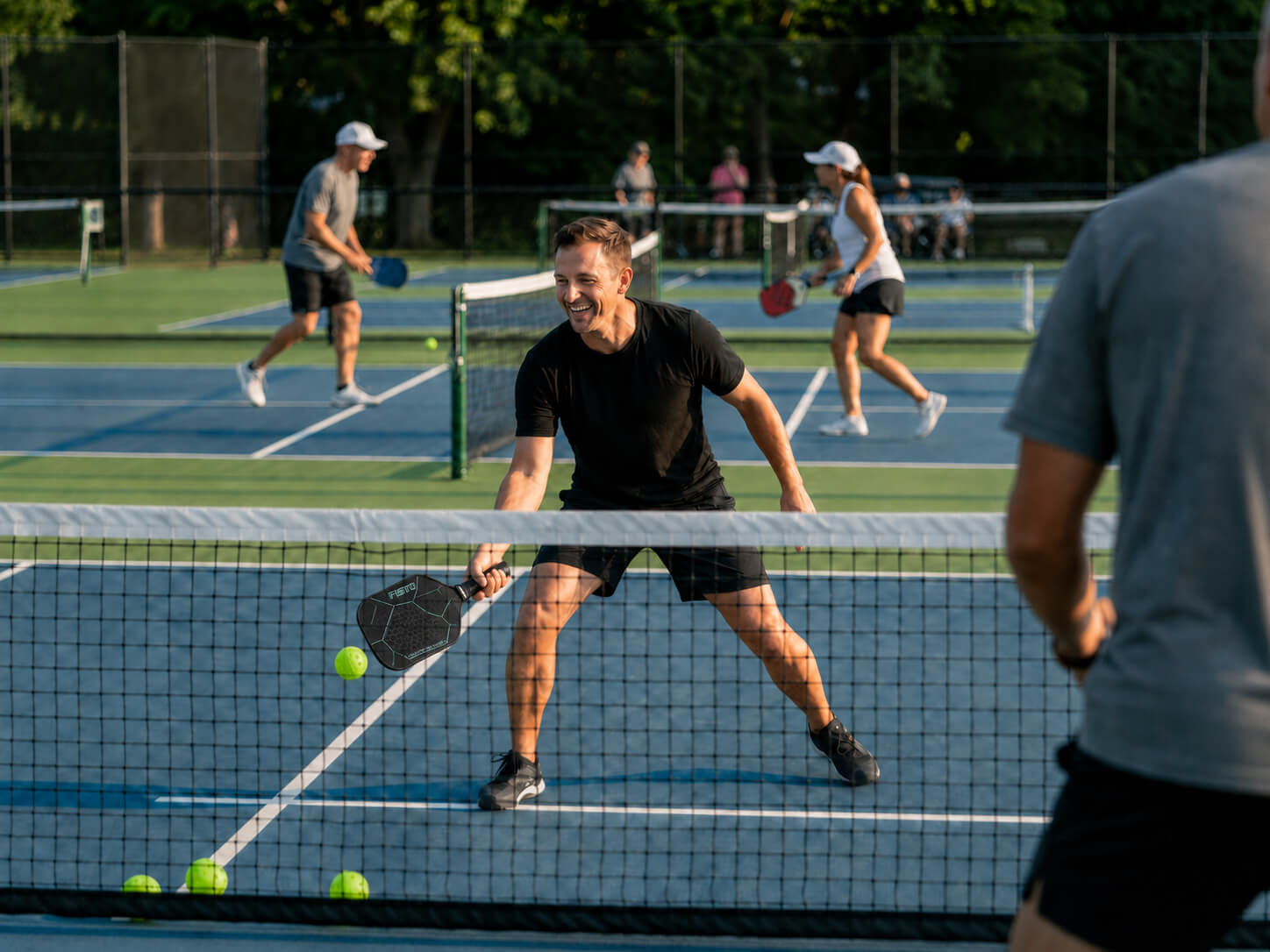
Playing Pickleball in Hot Weather: Summer Safety Tips
Hot weather pickleball can be one of the best parts of summer: blue skies, outdoor courts, and plenty of opportunities to play with friends. However, outdoor pickleball in summer can also place additional stress on your body.
These summer pickleball tips cover practical pickleball heat safety, including weather checks, smarter scheduling, sun protection, equipment preparation, and pickleball hydration tips for more comfortable outdoor games.
Heat safety is not only about drinking water. Temperature, humidity, direct sunlight, court surface, playing intensity, clothing, medications, health conditions, and how accustomed you are to the heat can all affect your risk.
Hot-Weather Pickleball Checklis
| Before playing | During play | After playing |
| Check temperature, humidity, and heat alerts | Drink regularly | Move to a cooler area |
| Choose a cooler time of day | Take more breaks | Continue replacing fluids |
| Pack water and cooling supplies | Watch teammates for symptoms | Change out of wet clothing |
| Wear lightweight clothing | Reduce pace when needed | Check how you feel before driving |
| Apply sun protection | Stop if you feel unwell | Store equipment away from heat |
1. Check More Than the Temperature
The temperature alone does not tell you how stressful the conditions will feel.
Before leaving home, check:
- Air temperature
- Humidity
- Heat index
- Local HeatRisk level
- Heat advisories or warnings
- UV conditions
- Air quality
- Amount of available shade
- Expected conditions during the entire session
High humidity can make it harder for sweat to evaporate. A court surrounded by concrete or asphalt may also feel significantly hotter in direct sunlight.
The National Weather Service provides HeatRisk and heat forecast tools that can help players understand the expected level of heat concern in their area.
If the forecast indicates dangerous conditions, moving the game to an indoor facility or rescheduling it is a sensible decision—not a missed training opportunity.
2. Choose a Cooler Time to Play
Outdoor courts are often hottest during the middle and later parts of the day. Whenever possible, schedule games:
- Early in the morning
- Later in the evening
- On a shaded court
- During a cooler day of the week
- Indoors when outdoor conditions become unsafe
Morning sessions can offer cooler air and less direct sunlight. Evening games may also be more comfortable, although some surfaces continue radiating heat after sunset.
A relaxed game does not need to occupy the entire afternoon. Our guide to planning a simple weekend pickleball activity explains how shorter sessions can fit into an active weekend without requiring a full-day commitment.
Check court lighting and facility hours before planning an early or late game.
3. Give Your Body Time to Adjust
A player who is comfortable during spring weather may struggle when summer heat arrives suddenly.
The body can gradually become better at handling heat, but this adjustment takes time. Avoid beginning the first very hot week of summer with a long, high-intensity match.
Instead:
- Start with shorter sessions.
- Play at a moderate pace.
- Take frequent breaks.
- Increase playing time gradually.
- Pay attention to how you feel after each session.
Players returning after an illness, injury, vacation, or long period of indoor activity may also need extra time to readjust.
Do not assume that previous experience in hot weather makes you immune to heat-related illness. Sleep, hydration, medications, fitness, health conditions, and current weather can change how your body responds.
4. Begin Hydrating Before the Match
Do not wait until the first water break to think about hydration.
Arrive at the court reasonably hydrated and bring enough fluid for the entire session. The amount needed varies depending on body size, sweat rate, temperature, humidity, intensity, session length, and individual health needs.
Practical habits include:
- Drinking fluids before arriving
- Bringing more water than you expect to need
- Taking regular drink breaks
- Drinking before you feel extremely thirsty
- Keeping water in an insulated bottle or cooler
- Avoiding excessive alcohol before and during play
- Watching for unusually dark urine or reduced urination
For longer or more demanding sessions, some players may benefit from a drink containing electrolytes. However, sports drinks are not necessary for every casual game, and people with medical conditions or dietary restrictions should follow guidance from a qualified healthcare professional.
Avoid forcing excessive amounts of water in a short period. Hydration should be steady and appropriate for your individual needs.
5. Take Breaks Before You Feel Exhausted
In mild weather, players may complete several games before resting. In hot conditions, that same routine may be too demanding.
Plan breaks in advance instead of waiting until someone becomes unwell.
Consider taking a break:
- Between every game
- After a long or intense rally
- When changing partners
- When moving between courts
- Whenever a player begins feeling unusually tired
- More often as heat or humidity rises
During the break:
- Move into shade or air conditioning
- Sit or stand in an area with airflow
- Drink fluids
- Use a cool, damp towel
- Remove unnecessary layers
- Allow your breathing and heart rate to settle
Do not feel pressured to continue simply because other players want another game. Heat tolerance varies considerably from person to person.
6. Lower the Intensity of the Game
Hot weather is not the ideal time to prove how hard you can train.
Adjust the session to the conditions. You can still enjoy pickleball while reducing overall heat exposure.
Try:
- Playing shorter games
- Taking longer breaks
- Rotating players more frequently
- Practicing serves and controlled shots
- Choosing doubles instead of singles
- Reducing long conditioning drills
- Avoiding repeated full-speed sprints
- Ending the session earlier than planned
Singles generally requires more court coverage and can feel considerably more demanding than doubles. If conditions are hotter than expected, changing to doubles or a controlled practice session may reduce physical strain.
Treat the weather as part of the game plan. Changing the format is a responsible adjustment, not a failed workout.
7. Wear Lightweight, Breathable Clothing
What you wear can affect how comfortable you feel on the court.
Choose clothing that is:
- Lightweight
- Loose enough for comfortable movement
- Breathable
- Suitable for managing sweat
- Light-colored when practical
- Appropriate for the court and weather
A hat or visor can provide additional shade for the face. Sunglasses may improve comfort and visibility, especially when serving or returning toward the sun.
Bring an extra shirt, towel, socks, or headband if you expect heavy sweating. Wet clothing can become uncomfortable during a long session.
Shoes should provide lateral support and traction appropriate for the court surface. Avoid choosing footwear based only on ventilation; stability remains important because pickleball involves frequent stops, starts, and changes of direction.
8. Protect Your Skin and Eyes
Outdoor pickleball can involve sustained exposure to direct sunlight, even on days that do not feel extremely hot.
Before playing:
- Apply broad-spectrum sunscreen according to the product directions.
- Cover commonly missed areas such as the ears, neck, and tops of the feet.
- Reapply sunscreen as directed, especially after heavy sweating.
- Wear a hat or visor.
- Use sunglasses suitable for sports.
- Seek shade during breaks.
Cloud cover does not eliminate UV exposure. Sun protection should remain part of your routine even when the sky is not completely clear.
Sunburn can also make it harder for the body to release heat, giving players another reason to protect exposed skin.
9. Pack a Hot-Weather Court Bag
A few extra items can make an outdoor session easier to manage.
Consider bringing:
- More water than usual
- An insulated bottle or cooler
- A cool, damp towel
- Sunscreen
- Sunglasses
- A hat or visor
- An extra shirt and socks
- A small first-aid kit
- A charged phone
- A portable shade option when allowed
- Appropriate indoor or outdoor pickleballs
A comfortable paddle can also help you avoid unnecessary gripping tension and oversized swings as fatigue increases.
The Zest 16mm Pickleball Paddle combines a fiberglass surface with a 16mm polypropylene honeycomb core, an enlarged sweet spot, and a cushioned PU grip. Its stable, forgiving construction is designed for casual play and regular court practice.
No paddle or accessory makes extreme heat safe. Equipment should support comfort and control, while decisions about whether to play should be based on the weather and each player’s condition.
10. Keep Your Equipment Out of Extreme Heat
Your body is not the only thing affected by summer temperatures.
Avoid leaving paddles, balls, grips, protective gear, water bottles, or electronics in a parked vehicle. Temperatures inside a car can rise rapidly, potentially affecting plastics, adhesives, grips, and other materials.
During play:
- Keep your bag in the shade.
- Close containers when they are not in use.
- Avoid placing the paddle directly on a hot court.
- Wipe sweat and moisture from the grip.
- Rotate pickleballs if they become unusually soft.
- Allow wet equipment to dry after the session.
Store paddles and balls in a cool, dry place after returning home. Do not place damp equipment inside a sealed bag for an extended period.
11. Watch Your Playing Partners
Heat can affect judgment, coordination, and awareness. A player experiencing heat-related illness may not recognize how unwell they are becoming.
Check on one another during the session.
Look for changes such as:
- Unusual fatigue
- Slower reactions
- Poor balance
- Muscle cramps
- Heavy sweating
- Headache
- Nausea
- Dizziness
- Weakness
- Irritability
- Confusion
- Difficulty following the score
The CDC’s guidance on heat safety for athletes recommends pacing activity, drinking more water than usual, scheduling exercise during cooler parts of the day, and monitoring teammates.
If someone begins behaving unusually, do not let that person continue playing alone or drive away without being assessed.
Know When to Stop Playing
Stopping early is better than trying to push through dangerous symptoms.
If you feel faint, weak, dizzy, nauseated, unusually tired, or develop muscle cramps or a headache:
- Stop playing immediately.
- Move to a cool or shaded location.
- Begin cooling down.
- Take small sips of cool water if you are alert and able to drink.
- Have another person stay with you.
- Seek medical care when appropriate.
Confusion, loss of consciousness, seizures, severe difficulty walking, or rapidly worsening symptoms may indicate a medical emergency. Call 911 and begin rapid cooling while waiting for emergency help.
Do not give fluids to someone who is unconscious, confused, vomiting repeatedly, or unable to swallow safely.
Symptoms that do not improve after rest and cooling should not be ignored. When in doubt, seek professional medical assistance.
Who Should Take Extra Precautions?
Anyone can develop heat-related illness, but some people may be more vulnerable.
Extra caution may be appropriate for:
- Older adults
- Children and teenagers
- Pregnant players
- People with heart, kidney, respiratory, or metabolic conditions
- Players taking medications that affect hydration or heat tolerance
- People recovering from illness
- Players who are not accustomed to hot weather
- Anyone who exercised heavily the previous day
- Players without access to reliable cooling or shade
If you have a medical condition or take medication that may affect heat tolerance, ask a healthcare professional how to adjust outdoor activity safely. Do not stop or change prescribed medication without medical guidance.
A Simple Summer Pickleball Plan
A hot-weather session can be organized around five steps.
Before Leaving Home
- Check the forecast and local alerts.
- Drink fluids.
- Apply sun protection.
- Pack cooling supplies.
- Confirm that shade or indoor space is available.
During Warm-Up
- Start slowly.
- Use controlled movements.
- Avoid immediate high-intensity rallies.
- Notice how your body responds to the conditions.
During Games
- Shorten games if necessary.
- Take scheduled breaks.
- Drink regularly.
- Monitor your partner.
- Adjust the intensity.
After Playing
- Move to a cooler location.
- Cool down gradually.
- Continue drinking according to thirst and individual needs.
- Change out of wet clothing.
- Watch for delayed symptoms.
Before the Next Session
- Review what worked.
- Adjust the time, duration, and equipment.
- Do not increase intensity if the previous session caused unusual fatigue or lingering symptoms.
Final Thoughts
Summer pickleball can be active, social, and enjoyable, but hot-weather play requires a different plan.
Check the forecast, avoid the hottest part of the day, arrive hydrated, wear appropriate clothing, protect yourself from the sun, and take more breaks than you would in cooler weather.
Most importantly, pay attention to symptoms. No match, practice session, or open-play rotation is worth risking a heat-related emergency.
Prepare before you play, monitor yourself and your partners, and be willing to move indoors or reschedule when conditions become unsafe.
The best summer game is one that everyone can finish safely.
FAQ
It can be possible to exercise safely in warm weather when appropriate precautions are taken, but extreme heat increases health risks. Consider the weather conditions, hydration, breaks, shade, and your personal health.
Cooler parts of the day, such as early morning or evening, may be more comfortable than the hottest part of the afternoon. Always check local weather conditions.
Comfortable, breathable sports clothing and suitable court shoes are practical choices. Sun protection is also important during outdoor activity.


