


Is a Thermoformed Pickleball Paddle Worth Trying?
A thermoformed pickleball paddle may be worth trying if you want a solid, connected feel during rallies. This approach to pickleball paddle construction can work with perimeter reinforcement to support paddle stability, but performance on off-center hits and overall paddle control still depend on the complete design.
The real test happens on the court. Can you block a fast drive, place a soft dink, and prepare the paddle comfortably for the next shot?
Here is what to consider before making the switch.
What Makes Thermoformed Construction Different?
Thermoformed paddles typically use heat and pressure during molding to integrate the paddle’s components. Some designs combine this process with carbon reinforcement around the perimeter or other edge structures.
For example, Six Zero’s explanation of its construction approach describes hot-mold production alongside a reinforced carbon edge seam and unibody construction. It illustrates how manufacturing methods and structural design can work together.
However, manufacturers use different materials, molding processes, and reinforcement layouts. The word “thermoformed” does not tell you everything about the finished paddle.
A Solid Feel During Fast Exchanges
During quick volleys and counters, a paddle that feels predictable at contact can be reassuring. An integrated structure may contribute to that connected sensation, particularly when paired with suitable face materials and reinforcement.
But a solid feel should also come with manageable handling.
When testing a paddle, notice whether you can:
- Keep it ready in front of your body.
- Switch comfortably between forehand and backhand blocks.
- Control the rebound against faster shots.
- Maintain the same handling comfort through a full session.
A paddle that feels substantial on contact may still be tiring to accelerate repeatedly. Weight and balance deserve as much attention as the construction label.
What Happens on Off-Center Hits?
Not every shot lands in the middle of the face. A rushed volley or stretched return may contact the ball closer to the edge.
One useful concept is twistweight, which describes resistance to rotation around the paddle’s long axis. The Kiwi Labs guide to paddle twistweight explains why weight distribution matters when contact moves away from the centerline.
Perimeter reinforcement and resistance to twisting are related aspects of design, but they are not interchangeable. Structural reinforcement does not automatically produce a higher twistweight or a larger usable sweet spot.
During a demo, pay attention to whether off-center contact causes the paddle to turn noticeably in your hand and whether the resulting shot remains predictable.
Does It Suit Your Playing Style?
Thermoformed construction can appear in paddles built for different priorities.
If you enjoy aggressive drives, you may prefer a firm response and enough stability to swing confidently. If your game relies on dinks, drops, and resets, you may place greater value on touch and predictable rebound.
Core design also matters. Our comparison of honeycomb and EPP foam pickleball paddle cores explains why the internal structure should be considered alongside the face, thickness, and weight distribution.
Try the shots you use most often. A paddle should support your normal game as well as the occasional powerful winner.
Look at the Complete Product Specification
A product example helps show why the manufacturing process is only part of the picture.
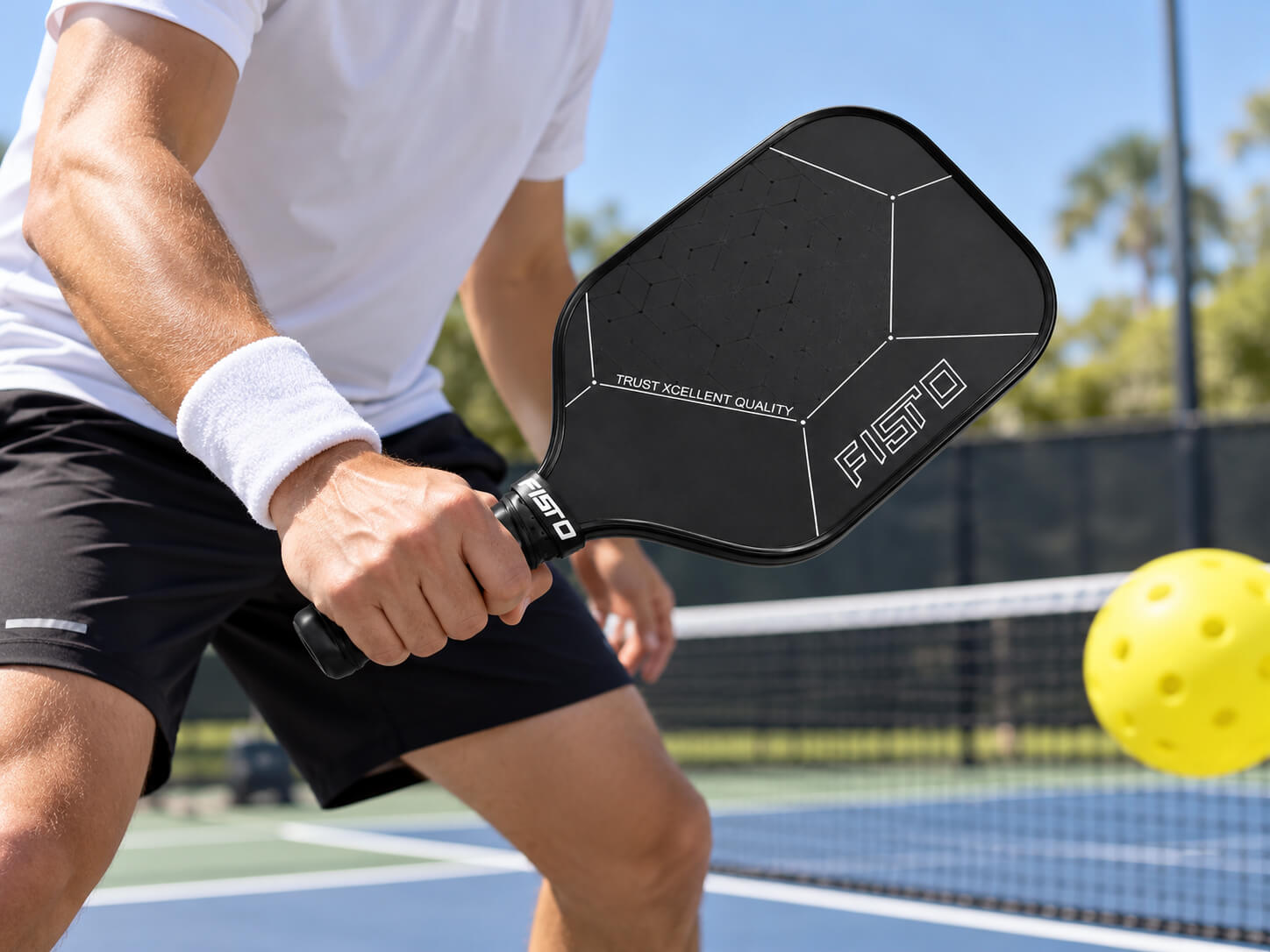
For example, the FISTO Lightweight 16mm T700 Carbon Fiber Pickleball Paddle combines a T700 carbon fiber face with a 16mm polypropylene honeycomb core. The product page describes heat-pressed core construction and positions the paddle for all-around recreational and intermediate play.
This combination shows why buyers should consider the materials and core design alongside the manufacturing process. Compare weight, balance, and grip comfort, then test how the paddle responds during drives, blocks, and soft shots.
What Should You Check Before Buying?
Use these five questions to guide your comparison:
- Feel: Does contact remain comfortable during longer sessions?
- Balance: Can you prepare the paddle quickly without forcing the motion?
- Control: Can you place dinks, drops, and resets consistently?
- Power: Does the response on drives and serves match your expectations?
- Build quality: Are the face, edges, handle, and grip securely assembled and well finished?
Smooth edges and a clean finish are useful inspection points, but they cannot confirm internal bonding quality. Clear product specifications, manufacturer support, and an opportunity to demo the paddle can make the decision easier.
A thermoformed paddle is worth trying when its handling and response match what you want to improve. Choose the model that performs comfortably across your everyday shots.
FAQ
Not necessarily. Power depends on several factors, including paddle stiffness, weight distribution, core design, and the player’s swing.
They can be, but intermediate players should also consider control, maneuverability, and comfort during extended play.
No. It is one part of the design. Core material, surface texture, thickness, weight, and personal preference also matter.


