


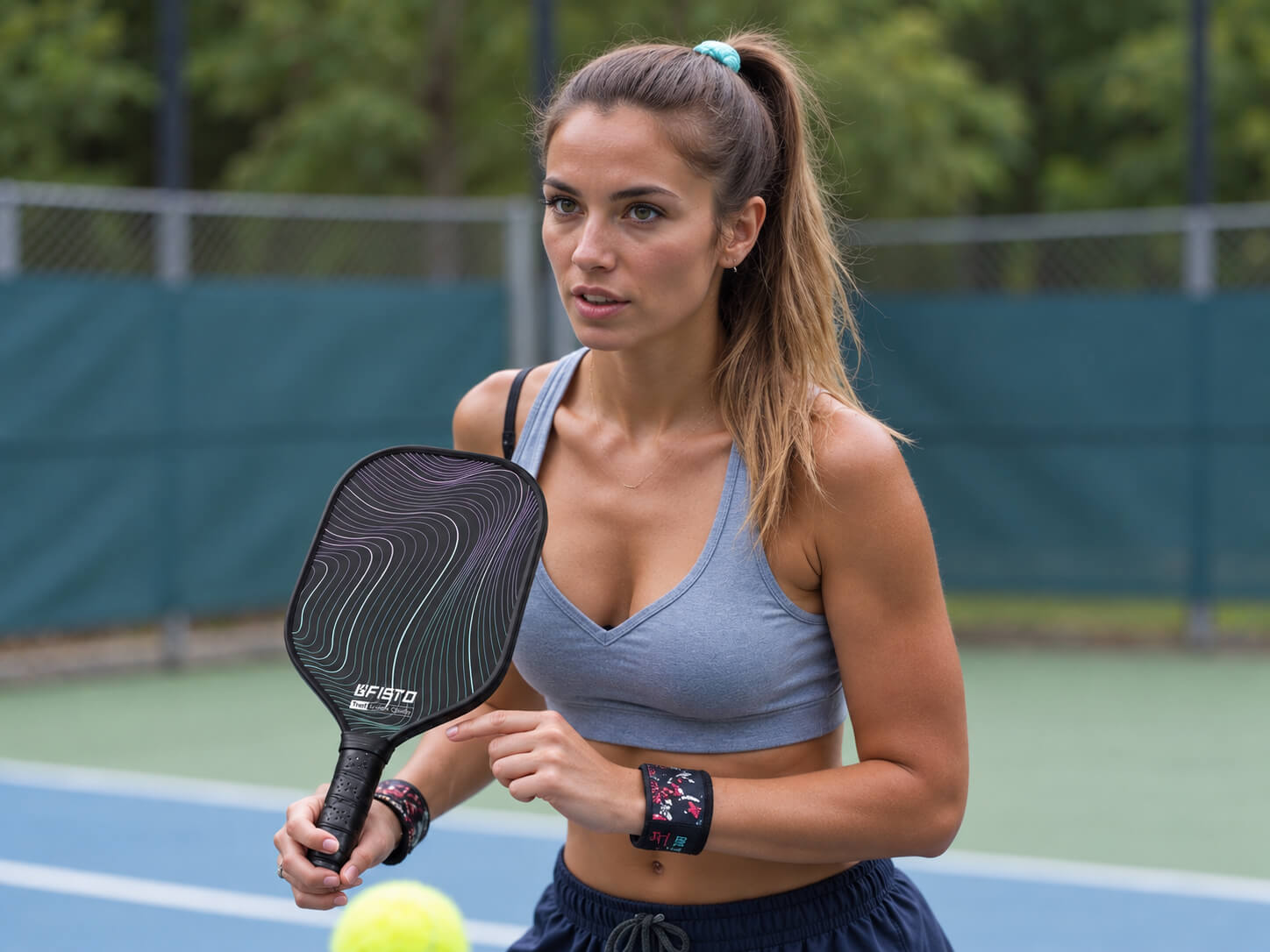
Solo Pickleball Drills You Can Practice Without a Full Game
You do not need four players or a complete match to improve your game. With purposeful solo pickleball drills, a few simple pickleball wall drills, focused pickleball serve practice, controlled pickleball footwork drills, and basic pickleball paddle control exercises, you can build consistency almost anywhere you have enough safe space.
A short, focused practice can help you isolate individual skills that are difficult to improve during a competitive game. Instead of worrying about the score, you can concentrate on your swing, contact point, balance, placement, and recovery position.
All you need is a paddle, several pickleballs, athletic shoes, and either a suitable wall or an open practice area.
Why Solo Pickleball Practice Works
Playing games is important, but match play does not always provide enough repetition.
During one game, you may hit only a few backhands, serves, resets, or specific target shots. Solo practice allows you to repeat the same movement until it feels more familiar.
The official USA Pickleball guide to fundamental pickleball drills emphasizes intentional repetition for improving touch, placement, consistency, and confidence.
A useful solo session should have a clear purpose. Instead of hitting balls randomly for 30 minutes, choose one or two skills and track your results.
Before You Start: Set Up a Safe Practice Area
Choose an area with a flat, dry surface and enough room to swing without hitting people, windows, vehicles, or nearby objects.
If you are using a wall, make sure you have permission and confirm that repeated ball contact will not damage the surface or disturb others. Avoid practicing in walkways or areas where a loose ball could create a tripping hazard.
Begin with a brief warm-up:
- Walk or lightly jog for two to three minutes
- Move side to side using small shuffle steps
- Circle your shoulders and wrists
- Practice several slow forehand and backhand swings
- Gradually increase your movement and swing speed
Once your body feels ready, move into the drills.
1. Build Consistency With Wall Rallies
A wall can become one of the most reliable practice partners available. It returns every playable shot and gives you immediate feedback.
Stand approximately six to ten feet from the wall, depending on your experience and the amount of space available. Hit gentle forehands against the wall and allow the ball to bounce before each return.
Your first goal is not speed. It is maintaining a controlled rally.
Try this progression:
- Complete 10 controlled shots in a row.
- Increase the goal to 20.
- Move half a step farther from the wall.
- Alternate between forehands and backhands.
- Aim at a specific mark on the wall.
Keep your paddle in front of your body and use a compact swing. If you repeatedly lose control, slow down and shorten the motion.
2. Practice Forehand and Backhand Repetition
Most players have one side that feels more natural. Solo repetition gives you time to work on both.
Start with forehands and focus on:
- Contacting the ball in front of your body
- Keeping your wrist relatively stable
- Using a smooth, compact swing
- Finishing toward the intended target
- Returning to a balanced ready position
After 20 forehands, switch to backhands.
Avoid running around every ball to use your preferred side. The purpose of the drill is to become comfortable with both strokes.
For an added challenge, alternate one forehand and one backhand. Count how many controlled repetitions you can complete before losing the rally.
3. Turn Serving Into Target Practice
Serving is one of the easiest skills to practice without a partner.
Place flat markers, cones, or towels in different parts of the service box. Use targets that will not create a hazard if you step on them.
Divide the service box into three practical areas:
- Deep toward the sideline
- Deep near the centerline
- A comfortable target several feet inside the baseline
Serve five balls toward each area and record how many land in the correct zone. Begin at a controlled pace before adding more speed.
A simple scoring system can make the drill more focused:
- One point for a legal serve in the service box
- Two points for reaching the intended target zone
- Zero points for a serve into the net or outside the court
Our guide to pickleball serve technique and targeted serving drills provides additional exercises for improving consistency, depth, direction, and placement.
Do not measure progress only by how hard you serve. A repeatable serve that lands deep is usually more valuable than a fast serve that frequently misses.
4. Improve Your Footwork Without Hitting a Ball
Good shots begin with good positioning. If you reach, lean, or swing while off balance, controlling the ball becomes much harder.
You can practice movement patterns without a court or partner.
Start in an athletic ready position with your knees slightly bent and the paddle in front of your body. Practice:
- Two shuffle steps to the right and back to center
- Two shuffle steps to the left and back to center
- Moving forward under control
- Retreating with small, balanced steps
- Using a split step before changing direction
- Stopping before making a shadow swing
Avoid crossing your feet during short lateral movements. Keep your upper body steady and try to finish every sequence in balance.
USA Pickleball’s Kitchen-line footwork drill demonstrates how moving behind the ball can improve balance, positioning, and shot control.
Quality matters more than speed. Practice the movement slowly before increasing the pace.
5. Develop Better Paddle Control
Paddle-control exercises help you become more familiar with the paddle face and the amount of force required to move the ball.
Begin by gently bouncing the ball on the forehand side of the paddle. Try to keep each bounce at approximately the same height.
Progress through these challenges:
- Complete 20 forehand-side bounces.
- Complete 20 backhand-side bounces.
- Alternate between the two sides.
- Change the height of the bounce on purpose.
- Walk slowly while maintaining control.
- Move the ball toward different areas of the paddle face.
Keep your grip relaxed enough to make small adjustments. If the ball repeatedly flies away from you, reduce the height and soften your touch.
This drill may look simple, but it develops hand-eye coordination, touch, and awareness of the paddle angle.
6. Practice Soft Shots Against a Wall
Once you can sustain a basic wall rally, move closer and practice softer shots.
Stand a few feet from the wall and imagine that a horizontal line represents the top of the net. Gently guide the ball above that line while keeping the rebound low and manageable.
Focus on:
- Holding the paddle in front
- Using minimal backswing
- Keeping your grip relaxed
- Absorbing the incoming ball
- Returning the ball with a controlled motion
Try to complete 10 soft shots without letting the ball rebound too high. This exercise can help you develop the touch used for dinks, blocks, and resets.
If the rebound becomes too fast, step back or reduce the force of your swing.
7. Combine Movement With a Shadow Swing
A player rarely hits every ball while standing in one place. This drill connects footwork, balance, and stroke preparation.
Place three markers several feet apart:
- Left
- Center
- Right
Begin at the center marker. Move to the left, stop under control, and make a forehand or backhand shadow swing. Return to the center and repeat on the right.
Keep the paddle in a ready position while moving. Your feet should help you arrive before the imaginary ball, allowing you to swing without reaching.
Complete three rounds of 30 seconds, resting briefly between rounds.
As your balance improves, add a ball feed, wall rebound, or controlled self-drop before the swing.
Use Practice to Evaluate Your Paddle
Repetitive drills can reveal details about your equipment that may be difficult to notice during a fast game.
As you practice, consider:
- Does the grip remain comfortable?
- Can you maneuver the paddle quickly?
- Does the weight feel manageable after several repetitions?
- Does the paddle feel stable on off-center contact?
- Can you control both soft and firm shots?
- Does the paddle produce excessive vibration in your hand?
A player looking for approachable all-around performance can consider the Zest 16mm Pickleball Paddle for Beginners and Recreational Players. Its fiberglass face, polypropylene honeycomb core, forgiving sweet spot, cushioned grip, and 16mm construction are designed to support control, stability, and comfortable recreational practice.
Equipment cannot replace sound technique, but a paddle that feels comfortable can make focused repetition easier.
A Simple 20-Minute Solo Practice Plan
You do not need a long training session to practice with purpose. Try this routine:
Minutes 1–3: Warm-Up
Use light movement, shoulder circles, wrist movements, and slow shadow swings.
Minutes 4–8: Wall Rally
Practice controlled forehand and backhand repetitions. Count your longest rally.
Minutes 9–13: Serve Practice
Hit three groups of five serves toward different target zones. Record your accuracy.
Minutes 14–17: Footwork
Practice lateral shuffles, forward movement, recovery steps, and balanced stops.
Minutes 18–20: Paddle Control
Finish with controlled paddle bounces or soft wall shots.
If one skill needs more attention, adjust the schedule. A focused 15-minute session can be more productive than an hour of random hitting.
Track Progress With Simple Goals
Measurable goals make it easier to recognize improvement.
You might track:
- Longest controlled wall rally
- Successful serves out of 20
- Serves that reach the target zone
- Consecutive paddle bounces
- Controlled forehand-to-backhand alternations
- Footwork rounds completed without losing balance
Record only a few numbers after each practice. Over time, those results can show whether your consistency is improving.
Do not expect every session to produce a personal best. Some days are better for technique, while others are better for speed or endurance.
Practice With a Purpose
Improving at pickleball does not always require a full game.
A wall, several target markers, a paddle, and a few balls can give you plenty of ways to work on your serve, strokes, footwork, touch, and control. The key is to choose a specific skill, repeat it carefully, and pay attention to the result of each movement.
Start slowly, stay balanced, and prioritize control before speed. When you return to a full game, those focused repetitions can help your movements feel more familiar and your shots more dependable.
A productive practice session is not measured by how long it lasts. It is measured by how intentionally you use each repetition.
FAQ
Yes. Wall drills, ball-control exercises, serving practice, and footwork drills can all be practiced individually.
There is no universal schedule. Your ideal practice frequency depends on your goals, experience, available time, and overall activity routine.
They serve different purposes. Games help you develop decision-making and match experience, while drills allow you to repeat specific movements and skills.


