


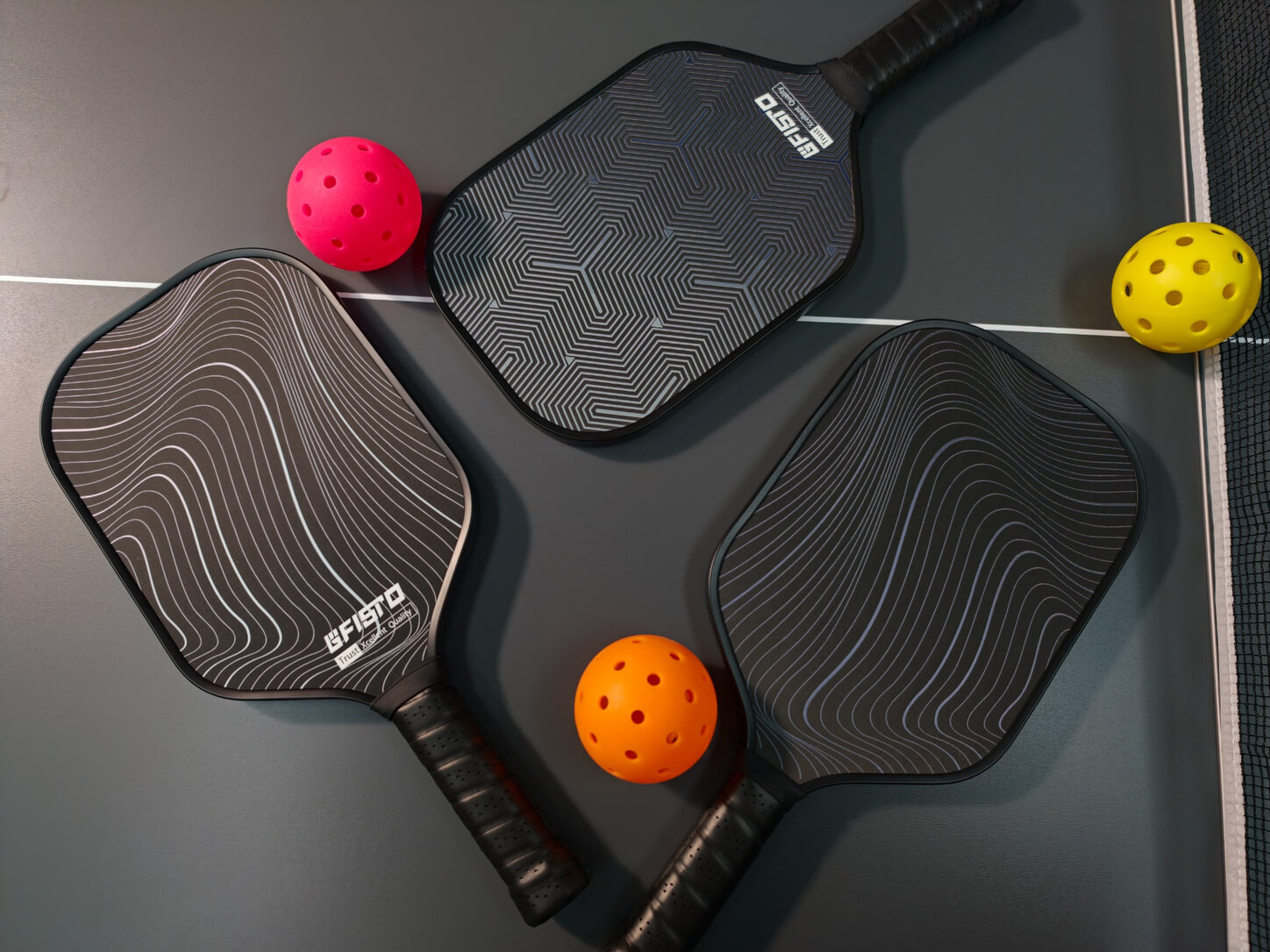
What Makes a Pickleball Paddle Feel Comfortable?
Choosing a comfortable pickleball paddle takes more than comparing specifications. Pickleball paddle weight, pickleball grip size, face material, and pickleball paddle core construction all affect how the paddle feels in your hand and moves through a swing. A carbon fiber pickleball paddle may offer a crisp, responsive feel, but comfort ultimately depends on how all these features work together for your game.
Here are five factors to consider when looking for a paddle that feels natural from the first serve to the final point.
1. Start With Weight—and Pay Attention to Balance
Weight is usually the first thing players notice, but the number on the product page does not tell the whole story.
A lighter paddle generally feels quicker in the hand. It can make fast exchanges, resets, and reactions at the kitchen line easier. A heavier paddle may provide more stability and help generate depth, but it can also require more effort during long games.
Balance matters just as much. Two paddles with the same listed weight can feel very different if one carries more weight near the head and the other feels more evenly balanced.
When testing a paddle, pay attention to whether you can:
- Move it quickly without forcing the swing
- Reset comfortably after each shot
- Maintain control during fast hand exchanges
- Play multiple games without unusual wrist or forearm fatigue
The best weight is not automatically the lightest or heaviest option. It is the weight you can control comfortably throughout a full session.
2. Choose a Grip That Lets Your Hand Stay Relaxed
Your hand remains in contact with the paddle during every serve, dink, drive, and volley. If the handle feels too large, too small, slippery, or awkwardly shaped, you may start squeezing harder to maintain control.
That extra tension can travel into the wrist and forearm. Mayo Clinic’s pickleball injury guidance notes that players should consider whether the grip is thick enough, since gripping too tightly may increase pressure on the wrist.
A comfortable grip should:
- Fit naturally in your hand
- Feel secure without excessive squeezing
- Provide enough traction when your hand gets sweaty
- Allow small grip changes during different shots
- Offer sufficient cushioning without feeling bulky
If the handle is slightly too small, an overgrip can add thickness and improve traction. A handle that is much too large, however, is harder to adjust.
3. Consider How the Face and Core Work Together
The paddle face affects ball contact and feedback, while the core influences stability, vibration, power, and control.
Carbon fiber faces are popular because they can provide a responsive, controlled feel. Fiberglass faces may feel more lively and can offer easier power for recreational play. Neither material is automatically more comfortable—the better choice depends on the type of feedback you prefer.
Core material and thickness also change the playing experience. A thicker core often feels more stable and cushioned, while a thinner core may produce a firmer, more direct response.
For example, the Velocity T700 Carbon Fiber Pickleball Paddle combines a T700 carbon fiber surface with a 16mm high-elasticity EPP core. Its ergonomic handle and high-traction grip are designed to improve comfort, balance, and swing leverage, creating a responsive feel for controlled shots and fast exchanges.
Players interested in sanctioned competition should also review the current USA Pickleball Equipment Standards Manual and confirm that their equipment meets applicable requirements.
4. Look Beyond the Main Specifications
Product listings often focus on weight, face material, and core thickness, but several less obvious details can influence comfort.
Handle Length
A longer handle provides more room for two-handed backhands and may create additional leverage. A shorter handle can feel more compact and easier to maneuver for players who keep one hand on the paddle.
Grip Shape
Some handles feel rounder, while others have more defined edges. The right shape should help you recognize the paddle-face position without creating pressure points in your hand.
Sweet Spot
A more forgiving sweet spot can make off-center contact feel less harsh. This may be especially helpful for beginners or recreational players who want consistent feedback.
Vibration and Feedback
Some players prefer a softer, muted response. Others want a crisp sensation that makes ball contact easier to recognize. Comfort does not always mean eliminating feedback—it means finding the level of feedback that feels natural to you.
5. Test the Paddle the Way You Actually Play
A few practice swings cannot fully show how a paddle will feel during a game. If possible, test it with the shots you use most often.
Try several dinks, drives, blocks, serves, overheads, and fast volleys. Pay attention to how easily you can prepare the paddle, make contact, and return to a ready position.
Ask yourself:
- Can I keep my grip relaxed?
- Does the paddle feel stable on off-center hits?
- Can I move it quickly at the kitchen line?
- Does the impact feel too harsh or too muted?
- Am I comfortable using it after several games?
New players can also review this beginner’s guide to choosing a pickleball paddle for a broader comparison of paddle shape, weight, grip, and core construction.
Match the Paddle to Your Priorities
There is no single paddle specification that works for every player.
If you value quick reactions, you may prefer a lighter or more handle-balanced paddle. If stability is your priority, a slightly heavier paddle or thicker core may feel more dependable. If you want controlled feedback, carbon fiber may be worth considering. If you mainly play casual games, easy handling and grip comfort may matter more than advanced performance features.
Your ideal paddle should match your hand, movement, playing frequency, and preferred style—not simply the longest list of technical specifications.
Final Takeaway
A comfortable paddle should feel like a natural extension of your hand. Weight, balance, grip size, handle shape, face material, and core construction all contribute to that feeling.
Use specifications to narrow down your options, but let real playing comfort guide the final decision. The right paddle is the one that helps you stay relaxed, move confidently, and enjoy more time on the court.
FAQ
USA Pickleball recommends considering factors such as paddle weight, grip size, materials, and overall design when selecting equipment.
Not necessarily. Paddle weight involves trade-offs between maneuverability, stability, and overall feel. Player preference is important.
Yes. Carbon fiber is widely used in modern paddle construction and is valued for its combination of strength and responsive performance.


