


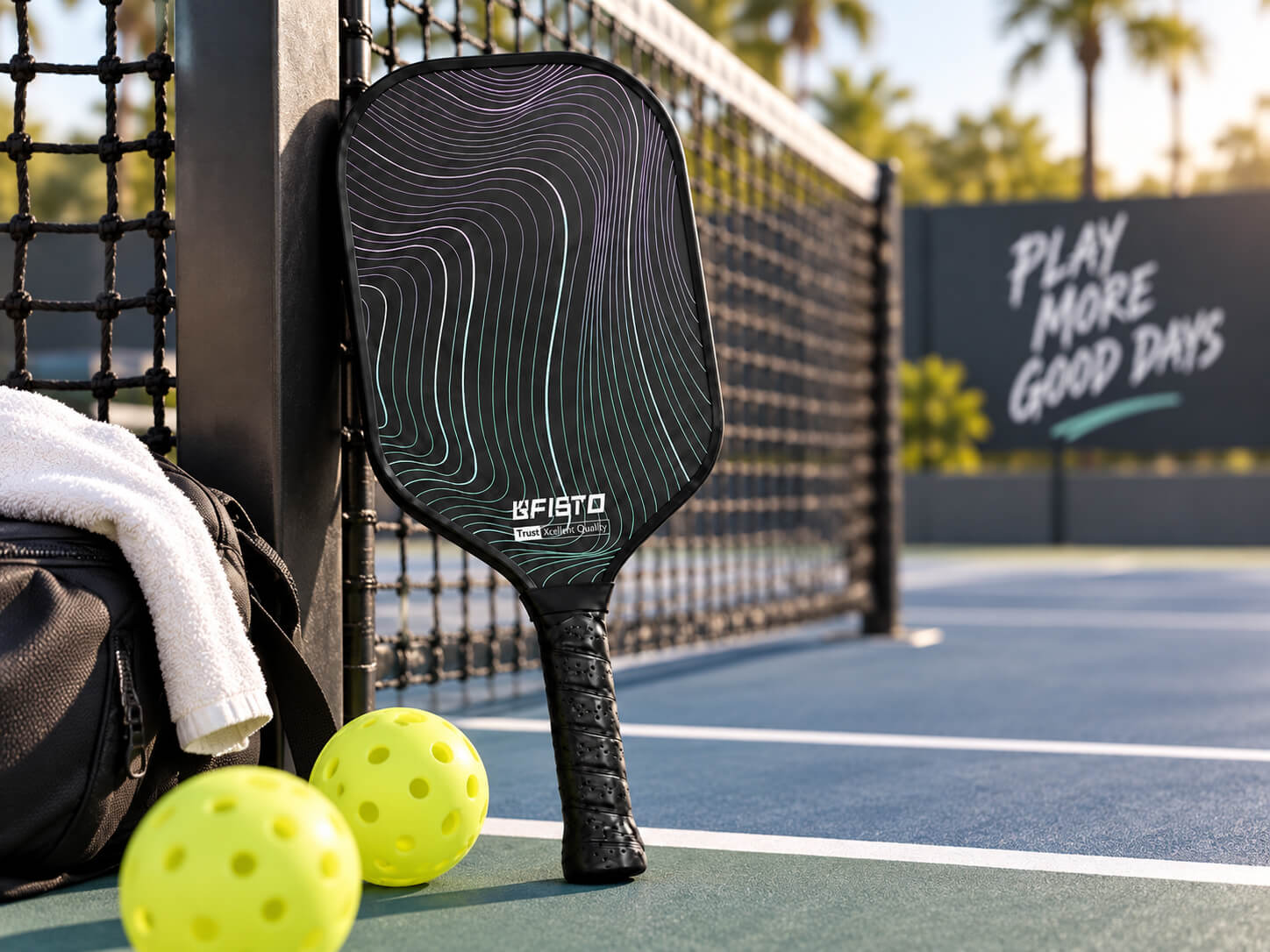
7 Common Pickleball Paddle Mistakes Players Should Avoid
Avoiding common pickleball paddle mistakes starts with understanding how your equipment fits your hand and playing style. Factors such as paddle weight, paddle materials, grip comfort, and regular paddle care can all influence how comfortable and consistent your paddle feels on the court.
Buying a new paddle is exciting, but choosing one is only the beginning. How you use, carry, and store it can also affect its condition and your overall playing experience.
Here are seven common mistakes—and practical ways to avoid them.
Paddle Mistakes at a Glance
| Common mistake | Better approach |
| Choosing by appearance alone | Compare weight, shape, grip, balance, core, and surface |
| Ignoring grip comfort | Select a handle that feels secure without excessive pressure |
| Assuming heavier is always better | Choose a weight you can maneuver comfortably |
| Focusing on one material | Evaluate the paddle’s complete construction |
| Leaving it in a hot car | Store it indoors in a dry, temperature-controlled area |
| Tossing it unprotected into a bag | Use a cover or dedicated paddle compartment |
| Playing with visible damage | Inspect the paddle and follow the manufacturer’s guidance |
1. Choosing a Paddle Based Only on Appearance
A bold graphic or attractive color can make a paddle stand out, but appearance should not be the main reason you buy it.
Two paddles that look similar may feel completely different because of variations in:
- Total weight
- Swing weight
- Balance point
- Paddle shape
- Core thickness
- Face material
- Handle length
- Grip circumference
Start with your playing needs. A beginner may prefer a forgiving sweet spot and comfortable weight, while an experienced player may prioritize spin, reach, stability, or faster handling.
Choose performance and comfort first. Let the design be the bonus.
2. Ignoring Grip Comfort
Your hand remains on the handle throughout every serve, dink, drive, and volley. If the grip feels too large, too small, slippery, or poorly shaped, it can become distracting during longer sessions.
A grip that is too large may make wrist movement feel restricted. One that is too small may cause you to squeeze harder than necessary to keep the paddle secure.
Before choosing a paddle, consider:
- Grip circumference
- Handle length
- Cushioning
- Surface texture
- Moisture management
- Whether you use an overgrip
Hold the paddle with relaxed pressure and make several practice swings. The handle should feel secure without forcing you to maintain a tight grip.
Remember that adding an overgrip can increase the handle circumference and slightly change the paddle’s overall weight and balance.
3. Assuming the Heaviest Paddle Is the Best Paddle
More weight does not automatically mean more performance.
A heavier paddle may provide additional momentum and stability, but it can also feel slower during quick exchanges. Some players may find it tiring during long games.
A lighter paddle can be easier to maneuver during fast volleys and reaction shots, but it may not provide the same stable feel against harder incoming balls.
The right paddle weight depends on:
- Your strength and conditioning
- Swing speed
- Preferred playing style
- Typical session length
- Comfort during repeated swings
- Need for maneuverability or stability
Instead of selecting the heaviest or lightest option available, look for a weight you can control comfortably from the beginning to the end of a session.
4. Focusing on Only One Paddle Material
Carbon fiber, fiberglass, polypropylene, EPP, thermoforming, and cold pressing are commonly used terms in paddle descriptions. Each term identifies one part of the construction—not the paddle’s complete playing character.
For example, two carbon-fiber paddles can feel different because they use different:
- Core materials
- Core thicknesses
- Shapes and dimensions
- Manufacturing processes
- Surface textures
- Edge structures
- Weight distributions
Rather than asking whether one material is always better, ask whether the complete paddle suits your game.
Our guide to fiberglass vs. carbon-fiber pickleball paddles provides a closer comparison of surface feel, rebound, control, durability, and common player profiles.
Material matters, but it should always be considered alongside the rest of the construction.
5. Leaving Your Paddle in a Hot Car
A parked car can become extremely hot in direct sunlight. Repeated exposure to excessive heat is not ideal for paddle faces, cores, adhesives, edge guards, grips, or protective coatings.
Cold temperatures and rapid temperature changes may also affect how certain materials feel and perform.
After playing:
- Take your paddle out of the vehicle.
- Wipe away moisture and dirt.
- Let a damp grip dry naturally.
- Store the paddle indoors.
- Keep it away from direct sunlight.
- Avoid placing heavy objects on top of it.
Do not assume that a paddle is protected simply because it is inside a bag. A paddle bag left in a hot vehicle is still exposed to the same environment.
6. Throwing an Unprotected Paddle Into Your Bag
Pickleball bags often contain balls, shoes, keys, water bottles, towels, and other equipment. When everything moves during transportation, hard or sharp objects can rub against the paddle face and edge guard.
A protective cover or dedicated compartment can help reduce unnecessary contact.
Before packing your paddle:
- Wipe off court dust and moisture.
- Check that the grip is reasonably dry.
- Place the paddle in a cover or separate compartment.
- Keep keys and sharp objects in another pocket.
- Avoid overpacking the bag or bending the paddle under other gear.
These simple habits will not prevent normal wear, but they can reduce avoidable scratches and impacts.
7. Continuing to Play With a Damaged Paddle
Minor cosmetic marks are common. Structural damage deserves more attention.
Inspect your paddle if you notice:
- Cracks in the face or edge
- Surface separation or delamination
- Unusual dents or soft areas
- A loose or separated edge guard
- Rattling inside the paddle
- A grip that rotates or shifts
- A sudden change in sound or response
Stop using the paddle if its condition appears unsafe or significantly compromised. Check the manufacturer’s warranty, repair, and replacement recommendations before attempting to modify it yourself.
Players entering sanctioned events should also review the official USA Pickleball Equipment Standards Manual, which outlines paddle construction and compliance requirements.
How to Choose a Pickleball Paddle More Carefully
A better buying decision begins with your actual playing habits.
Ask yourself:
- How often do I play?
- Do I prefer control, power, or a balanced response?
- What paddle weight remains comfortable during longer games?
- Do I want faster handling or additional stability?
- What grip circumference feels natural?
- Do I use a one-handed or two-handed backhand?
- Am I buying for recreational or tournament play?
- Do I mostly play singles or doubles?
Once you understand those preferences, product specifications become easier to evaluate.
For example, the Power X4 16mm T700 Carbon-Fiber Pickleball Paddle combines a T700 carbon-fiber surface, 16mm polypropylene honeycomb core, extended handle, and a listed weight of 220 ± 10 grams. This construction is designed for players seeking a balance of control, spin, stability, and power.
That does not mean it is automatically right for every player. Its dimensions, weight, handle, and overall response should still match the intended user’s comfort and playing style.
Check Tournament Approval Before Competing
Owning a well-made paddle does not necessarily mean it is approved for every organized event.
Tournament players should search the official USA Pickleball Approved Paddle List by brand and model before competing. Approval status can be more important than marketing terms such as “professional,” “advanced,” or “tournament style.”
Recheck the list before an event instead of assuming that a previously approved model remains eligible indefinitely.
Build a Simple Paddle-Care Routine
You do not need a complicated maintenance process. After each session:
- Remove surface dust with an appropriate soft cloth.
- Dry the paddle if it becomes wet.
- Check the face, edge guard, and handle.
- Allow sweaty grips to air-dry.
- Store the paddle indoors.
- Use a cover while transporting it.
- Follow the manufacturer’s cleaning instructions.
Avoid soaking the paddle or experimenting with aggressive cleaners, abrasive tools, or unauthorized surface treatments.
Final Thoughts
The best paddle is not always the most expensive, heaviest, newest, or most visually impressive option. It is the one that suits your hand, movement, playing style, and goals.
Pay attention to the entire construction, choose a comfortable grip and weight, protect the paddle during transportation, and inspect it regularly for damage.
Better equipment decisions begin with knowing what you need—and good paddle care helps you get more consistent use from the equipment you choose.
FAQ
Not necessarily. Paddle weight is a personal preference and can affect maneuverability and overall feel.
There is no universal answer. Different face materials and constructions can provide different playing characteristics. The overall paddle design matters.
Visible structural damage, significant cracking, or other serious deterioration can be reasons to stop using a paddle. Always check the manufacturer’s recommendations.


