










[AR] How Pickleball Paddle Texture Affects Spin
Pickleball paddle texture can influence ball contact, but a rougher surface does not automatically produce more pickleball spin. Understanding paddle friction helps explain why. Whether you are considering a raw carbon fiber paddle or comparing a pickleball paddle for spin, look beyond how the face feels under your fingertips.
The key question is how the ball interacts with the paddle during impact—and whether that interaction helps you produce consistent shots.
Does a Rougher Paddle Surface Create More Spin?
Not necessarily. Surface roughness, friction, and spin describe different things.
| Term | What it describes |
| Surface roughness | The height, spacing, and pattern of surface features |
| Friction | Resistance to sliding between the ball and paddle |
| Spin | The ball’s rotation after contact |
In its pickleball paddle surface analysis, Digital Metrology compared two paddles and found that the paddle that felt rougher had lower measured average surface roughness but higher static friction.
That distinction matters: an average roughness measurement does not fully describe how a surface interacts with a ball. The study compared two paddles using a static friction test; it did not measure shot spin or establish a universal ranking of paddle surfaces.
For shoppers, rubbing a paddle with your fingertips offers an impression of its texture, not a reliable spin measurement.
What Does Research Say About Friction and Spin?
Friction matters, but increasing friction does not always produce a proportional increase in spin.
Tennis Warehouse University’s experimental study of pickleball spin distinguished between impacts where the ball slides across the face and those where it grips during contact. Under comparable incoming conditions, paddles could produce similar spin when the ball gripped. When sliding continued throughout impact, greater friction could increase spin.
These findings explain why “rougher equals more spin” is an incomplete rule. They do not establish that every paddle produces identical spin in everyday play. The experiment’s impact conditions and tested equipment limit how broadly its results can be applied.
Does Raw Carbon Fiber Guarantee Better Spin?
No. A material label is not a spin rating.
Raw carbon fiber, woven carbon fiber, and textured fiberglass describe different aspects of a paddle face. They are not necessarily mutually exclusive categories, and none tells you everything about the finished surface.
Likewise, a carbon fiber grade identifies the fiber rather than the paddle’s complete playing characteristics. Our guide to what T700 carbon fiber means in a pickleball paddle explains why resin, fiber arrangement, and manufacturing also matter.
When comparing paddles, separate three questions: What is the face made from? How is its surface finished? What performance has actually been measured?
How to Compare Paddles for Spin
A useful comparison considers both shot performance and handling.
- Keep the ball consistent. Use the same ball model in similar condition when comparing paddles.
- Repeat familiar shots. Test serves, topspin drives, and slice shots rather than judging a paddle from one impressive hit.
- Track placement as well as rotation. Notice how often your shots reach the intended target.
- Compare handling. Weight, balance, grip fit, and handle length affect how comfortably you execute your swing.
- Check test conditions. A published spin figure is more useful when the testing method, ball, and paddle condition are explained.
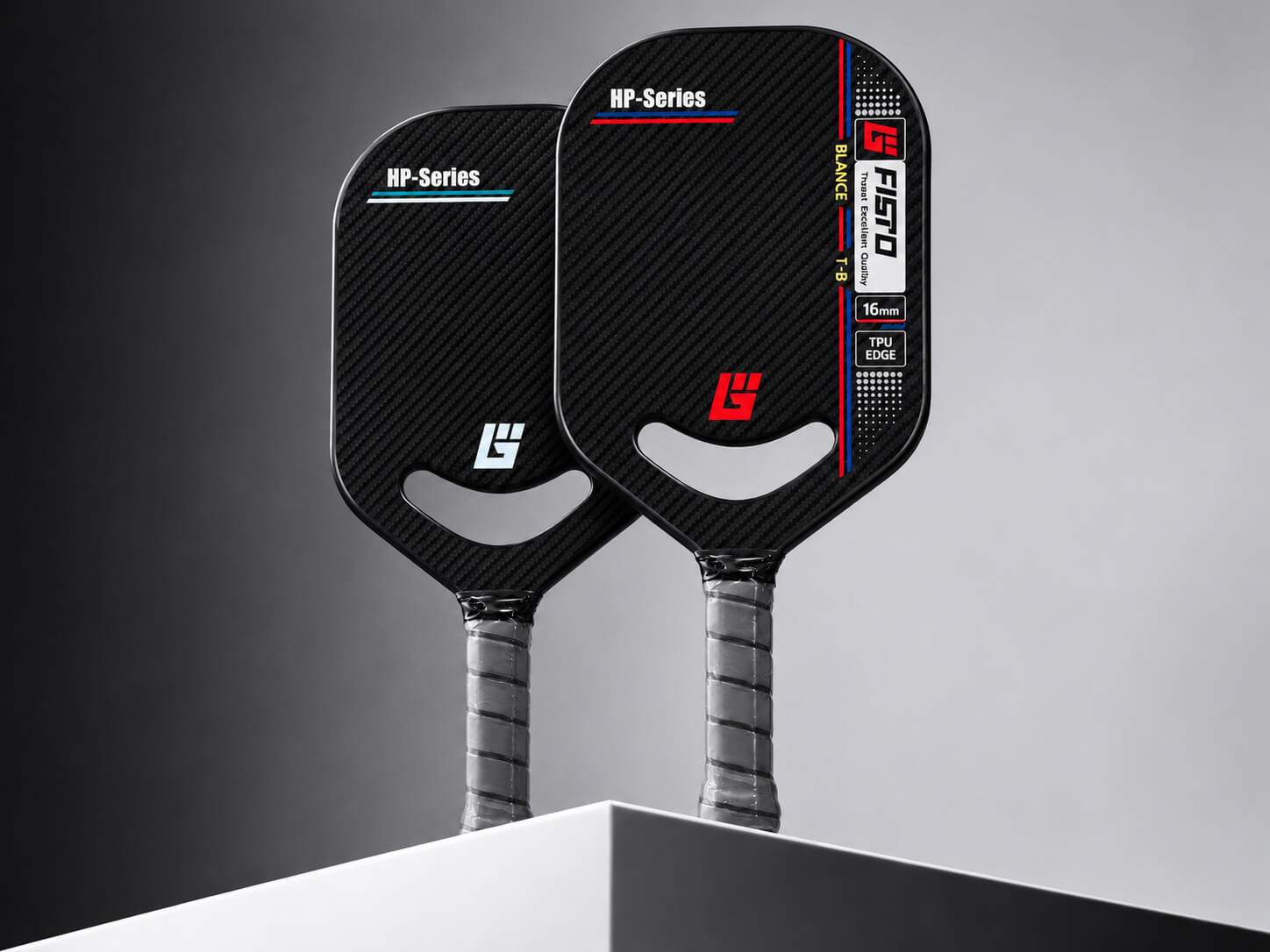
For example, the FISTO 16mm T700 Carbon Fiber Pickleball Paddle features a raw carbon fiber surface, a face combining T700 carbon fiber and fiberglass, and a 16mm EPP foam core. Its listed weight of 230 ± 10 grams and 14 cm handle provide additional details to consider when comparing handling and grip comfort. These specifications describe the complete design, but surface texture alone does not establish spin performance. Test a sample with the same ball during serves, topspin drives, and slice shots to assess spin, placement, and how comfortably you can repeat each stroke.
What Should Paddle Brands Evaluate?
For brands developing a textured paddle, surface appearance should be supported by repeatable testing.
A practical evaluation plan should document the finishing process, compare multiple production samples, and assess performance before and after controlled wear. Spin comparisons should also record the ball, impact conditions, and measurement method.
This gives buyers more useful evidence than a description such as “extra rough” or a close-up photograph of the face.
Can You Choose a Spin Paddle by Touch Alone?
No. Touch can help you notice differences between surfaces, but it cannot measure ball rotation or predict how consistently you will execute a shot.
Use texture as one comparison point. Then evaluate the paddle with your usual shots, paying attention to placement, handling, and repeatability.


